Assessment in the PYP plays a vital role in supporting inquiry-based learning, conceptual understanding, and student growth within the International Baccalaureate Primary Years Programme (IB PYP).
The PYP views assessment as an ongoing and meaningful process that helps learners reflect, take action, and develop a deeper understanding of their learning through both formative and summative approaches.
𝐖𝐡𝐚𝐭 𝐢𝐬 𝐀𝐬𝐬𝐞𝐬𝐬𝐦𝐞𝐧𝐭 𝐢𝐧 𝐭𝐡𝐞 𝐏𝐘𝐏?
Assessment in the PYP is all about understanding and supporting student learning in an ongoing, interactive way. It’s not just about giving grades; it’s about gathering real evidence of learning, making sense of it, and using that information to guide teaching and help students grow.

The PYP values assessments that feel real and meaningful to students. It’s about creating learning experiences where students actively participate, reflect, and take responsibility for their own learning. Through continuous feedback and guidance, students gain a clearer understanding of their strengths, areas for improvement, and the steps they need to take to progress.
What’s unique about assessment in the PYP is its strong connection to inquiry-based learning. It’s designed to promote curiosity, critical thinking, and a deeper understanding of concepts. The goal is to help students see assessment as a tool for learning rather than just a measure of achievement. Ultimately, it’s about empowering students to take ownership of their learning journey and become confident, reflective, and responsible learners.
𝐎𝐧𝐠𝐨𝐢𝐧𝐠 𝐀𝐬𝐬𝐞𝐬𝐬𝐦𝐞𝐧𝐭𝐬 (𝐀𝐬𝐬𝐞𝐬𝐬𝐦𝐞𝐧𝐭 𝐟𝐨𝐫 𝐋𝐞𝐚𝐫𝐧𝐢𝐧𝐠)

Ongoing Assessments (Assessment for Learning) provide immediate feedback, identify strengths and areas for improvement, and guide further instruction.
𝐂𝐡𝐚𝐫𝐚𝐜𝐭𝐞𝐫𝐢𝐬𝐭𝐢𝐜𝐬:
- Continuous and flexible.
- Integrated within the learning process.
- Provides timely feedback to students and teachers.
- Encourages student reflection and self-assessment.
Example: During a Unit of Inquiry on “Ecosystems,” teachers conduct regular check-ins through concept maps, discussions, and exit tickets to gauge students’ evolving understanding of the topic.
𝐀𝐬𝐬𝐞𝐬𝐬𝐦𝐞𝐧𝐭 𝐨𝐟 𝐋𝐞𝐚𝐫𝐧𝐢𝐧𝐠

Assessment of Learning aims to evaluate student learning at the end of a learning period, providing a comprehensive overview of what students have achieved concerning the learning objectives.
𝐂𝐡𝐚𝐫𝐚𝐜𝐭𝐞𝐫𝐢𝐬𝐭𝐢𝐜𝐬:
- Occurs at the end of a unit or learning segment.
- Provides evidence of overall learning and understanding.
- Evaluative rather than diagnostic.
- Assesses knowledge, skills, and conceptual understanding.
Example: At the end of the “Ecosystems” unit, students create a presentation explaining their chosen ecosystem, highlighting its components, relationships, and how human activities affect it.
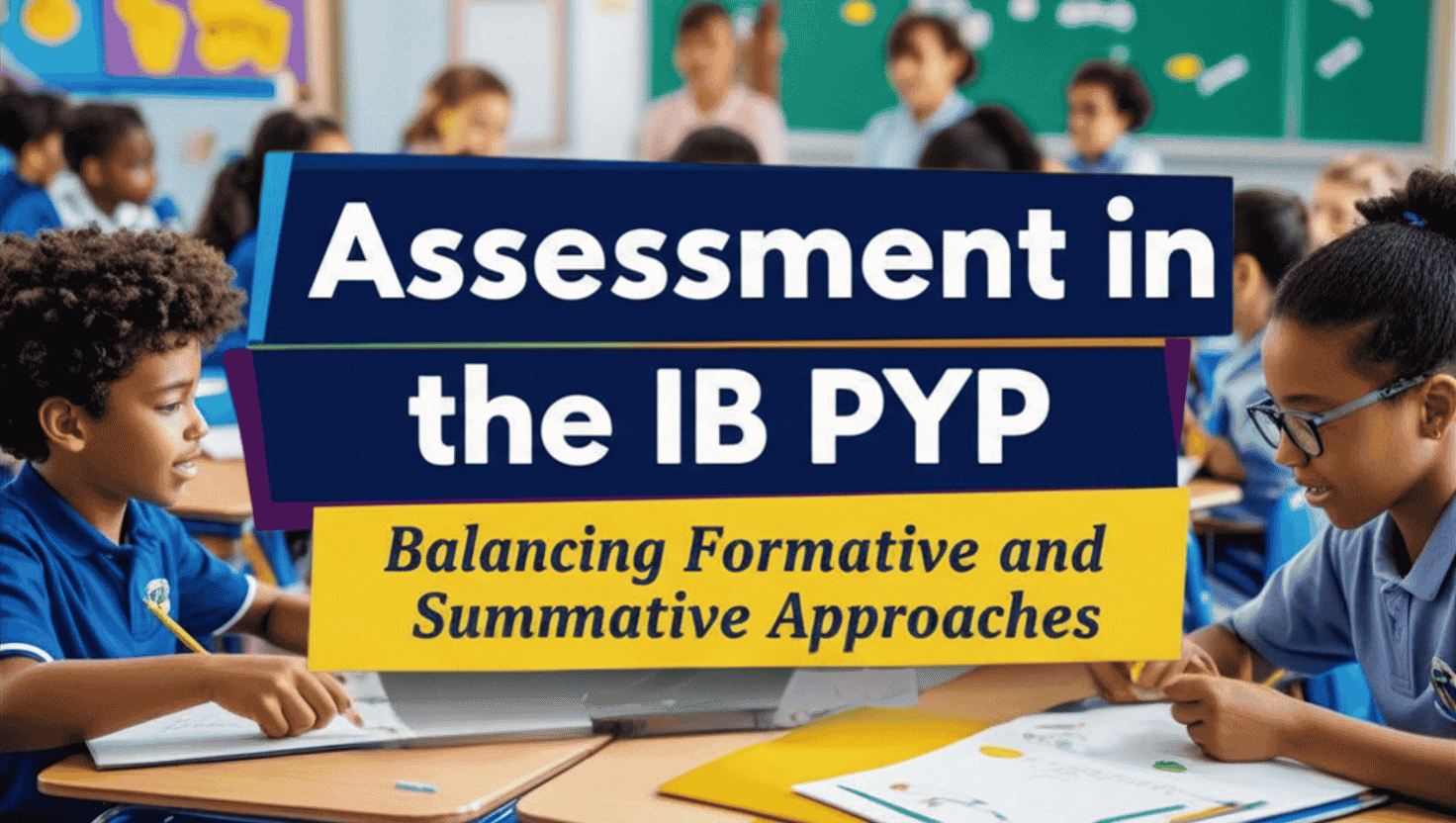
𝐁𝐚𝐥𝐚𝐧𝐜𝐢𝐧𝐠 𝐅𝐨𝐫𝐦𝐚𝐭𝐢𝐯𝐞 𝐚𝐧𝐝 𝐒𝐮𝐦𝐦𝐚𝐭𝐢𝐯𝐞 𝐀𝐩𝐩𝐫𝐨𝐚𝐜𝐡𝐞𝐬

The PYP emphasizes a balanced approach where formative and summative assessments work together to enhance learning. Effective assessment in the PYP:
- Encourages student agency by involving learners in setting learning goals and reflecting on their progress.
- Utilizes a variety of assessment tools such as rubrics, self-assessments, peer assessments, portfolios, and reflections.
- Promotes collaborative planning between teachers and students.
Example: While working on a research project about “Cultural Diversity,” students receive feedback through peer reviews (formative) before presenting their final project to the class (summative).
Benefits of Effective Assessment in the PYP

𝐄𝐟𝐟𝐞𝐜𝐭𝐢𝐯𝐞 𝐚𝐬𝐬𝐞𝐬𝐬𝐦𝐞𝐧𝐭 𝐢𝐧 𝐭𝐡𝐞 𝐏𝐘𝐏:
- Supports differentiated learning by addressing diverse learning needs and styles.
- Encourages a growth mindset by valuing progress over perfection.
- Enhances student motivation by making learning goals clear and achievable.
- Provides valuable data for teachers to refine their teaching strategies.
Example: Teachers use assessment data from student reflections and peer assessments to modify the upcoming Unit of Inquiry to address learning gaps and deepen understanding.
𝐂𝐨𝐧𝐜𝐥𝐮𝐬𝐢𝐨𝐧
In the IB PYP framework, assessment is more than a tool for evaluating learning; it is a fundamental part of the learning process itself. By effectively balancing formative and summative approaches, the PYP ensures that assessment fosters student agency, promotes inquiry-based learning, and drives continuous improvement.