𝗜𝗻𝘁𝗿𝗼𝗱𝘂𝗰𝘁𝗶𝗼𝗻: 𝗧𝗵𝗲 𝗖𝗼𝗿𝗻𝗲𝗿𝘀𝘁𝗼𝗻𝗲 𝗼𝗳 𝗟𝗶𝗳𝗲𝗹𝗼𝗻𝗴 𝗟𝗲𝗮𝗿𝗻𝗶𝗻𝗴
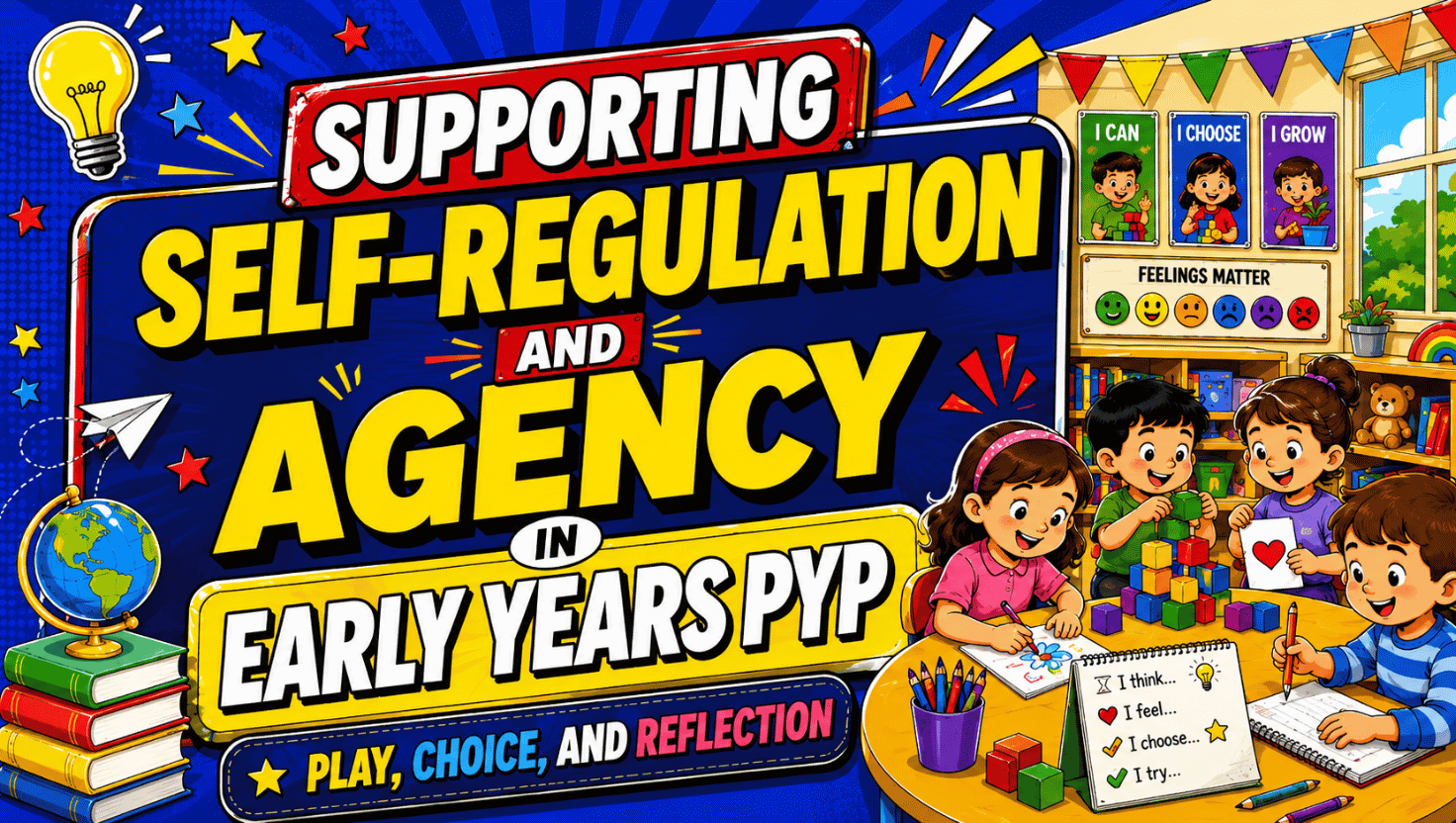
Self-Regulation and Learner Agency in Early Years PYP are essential for helping children develop independence, emotional awareness, confidence, and ownership of learning. In the new 2025 IB PYP Early Years framework, these skills are central parts of learning. When children learn how to handle their emotions and make their own choices, they feel engaged, bounce back easily, and enjoy learning more.
This article is a practical guide, full of examples and simple strategies. It is meant to help all teachers, especially those new to the PYP, build self-regulation and agency into everyday classroom life.
𝗨𝗻𝗱𝗲𝗿𝘀𝘁𝗮𝗻𝗱𝗶𝗻𝗴 𝗦𝗲𝗹𝗳-𝗥𝗲𝗴𝘂𝗹𝗮𝘁𝗶𝗼𝗻 𝗮𝗻𝗱 𝗟𝗲𝗮𝗿𝗻𝗲𝗿 𝗔𝗴𝗲𝗻𝗰𝘆
𝟭.𝟭 𝗪𝗵𝗮𝘁 𝗶𝘀 𝗦𝗲𝗹𝗳-𝗥𝗲𝗴𝘂𝗹𝗮𝘁𝗶𝗼𝗻?
Self-regulation is how children learn to manage their emotions, actions, and focus. It means they can wait for their turn, talk about their feelings, change plans when needed, and keep trying even when things get hard.
𝟭.𝟮 𝗪𝗵𝗮𝘁 𝗶𝘀 𝗟𝗲𝗮𝗿𝗻𝗲𝗿 𝗔𝗴𝗲𝗻𝗰𝘆?
Learner agency is about children making choices in their learning. They decide what interests them, try ideas out, and think about their own progress.
Why These Skills Matter in Early Years
- Children build thinking and problem-solving skills.
- They develop friendships and work well with others.
- They get excited about learning.
- They become better at solving problems by themselves.
𝟮. 𝗗𝗲𝘃𝗲𝗹𝗼𝗽𝗺𝗲𝗻𝘁𝗮𝗹 𝗠𝗶𝗹𝗲𝘀𝘁𝗼𝗻𝗲𝘀 𝗳𝗼𝗿 𝗥𝗲𝗴𝘂𝗹𝗮𝘁𝗶𝗼𝗻 𝗮𝗻𝗱 𝗔𝗴𝗲𝗻𝗰𝘆
This table shows important abilities children develop as they learn to manage their feelings, attention, and choices. These milestones help teachers spot, support, and encourage social-emotional growth at different ages. By planning with these in mind, educators create a classroom environment where every child feels seen and supported.

𝟯. 𝗣𝗹𝗮𝘆-𝗕𝗮𝘀𝗲𝗱 𝗦𝘁𝗿𝗮𝘁𝗲𝗴𝗶𝗲𝘀 𝗳𝗼𝗿 𝗕𝘂𝗶𝗹𝗱𝗶𝗻𝗴 𝗥𝗲𝗴𝘂𝗹𝗮𝘁𝗶𝗼𝗻 𝗮𝗻𝗱 𝗔𝗴𝗲𝗻𝗰𝘆
𝟯.𝟭. 𝗖𝗵𝗼𝗶𝗰𝗲-𝗗𝗿𝗶𝘃𝗲𝗻 𝗟𝗲𝗮𝗿𝗻𝗶𝗻𝗴 𝗖𝗲𝗻𝘁𝗲𝗿𝘀
This table describes hands-on activities and strategies used during play to help children develop self-control, independence, and teamwork. Each example is easy to try, supports real classroom needs, and shows how play leads to strong social and learning skills. Using these approaches helps every child grow in confidence and self-management.

𝟯.𝟮. 𝗘𝗺𝗼𝘁𝗶𝗼𝗻 𝗖𝗼𝗮𝗰𝗵𝗶𝗻𝗴 𝗧𝗵𝗿𝗼𝘂𝗴𝗵 𝗦𝘁𝗼𝗿𝘆𝘁𝗲𝗹𝗹𝗶𝗻𝗴 𝗮𝗻𝗱 𝗥𝗼𝗹𝗲-𝗣𝗹𝗮𝘆
Emotion coaching builds self-awareness, language, and empathy by encouraging children to talk about feelings and practice emotional skills. This table outlines examples where teachers use stories, role-play, and reflections to help children name, understand, and manage emotions. By weaving these routines into play and discussion, teachers give children tools for lifelong social-emotional growth.

𝟯.𝟯. 𝗦𝘁𝗿𝘂𝗰𝘁𝘂𝗿𝗲𝗱 𝗙𝗹𝗲𝘅𝗶𝗯𝗶𝗹𝗶𝘁𝘆 𝗶𝗻 𝗥𝗼𝘂𝘁𝗶𝗻𝗲𝘀
Structured flexibility blends predictable routines with space for children’s voices and choices. This approach makes transitions easier while allowing every child to experience autonomy within a supportive framework. The table gives examples of how teachers balance scheduling and flexibility, ensuring children feel both safe and empowered every day.

𝟰. 𝗗𝗲𝘀𝗶𝗴𝗻𝗶𝗻𝗴 𝗖𝗹𝗮𝘀𝘀𝗿𝗼𝗼𝗺 𝗘𝗻𝘃𝗶𝗿𝗼𝗻𝗺𝗲𝗻𝘁𝘀 𝘁𝗼 𝗙𝗼𝘀𝘁𝗲𝗿 𝗥𝗲𝗴𝘂𝗹𝗮𝘁𝗶𝗼𝗻 𝗮𝗻𝗱 𝗔𝗴𝗲𝗻𝗰𝘆
𝟰.𝟭 𝗞𝗲𝘆 𝗙𝗲𝗮𝘁𝘂𝗿𝗲𝘀
- Zones with clear signs (active play, quiet time, creative/art, sensory, outdoor).
- Visual choice boards and icons for activities.
- Shelves at child height so kids pick and return materials.
- Cozy corners and soft seats for calming; fidget tools, feelings posters.
- Problem-solving board or table for trying out solutions.
- Reflection stations with photos, question cards, or mirrors.
𝟰.𝟮. 𝗩𝗶𝘀𝘂𝗮𝗹 𝗢𝗿𝗴𝗮𝗻𝗶𝘇𝗲𝗿: 𝗦𝗮𝗺𝗽𝗹𝗲 𝗖𝗹𝗮𝘀𝘀𝗿𝗼𝗼𝗺 𝗟𝗮𝘆𝗼𝘂𝘁
This table describes different zones in an early years classroom designed to support children’s development in specific ways. Each area is set up to create opportunities for movement, calm, creativity, exploration, problem-solving, and sharing. Thoughtful arrangement of these zones helps children make independent choices and safely explore a range of experiences.

𝟱. 𝗜𝗻𝗰𝗼𝗿𝗽𝗼𝗿𝗮𝘁𝗶𝗻𝗴 𝗥𝗲𝗳𝗹𝗲𝗰𝘁𝗶𝗼𝗻: 𝗧𝗼𝗼𝗹𝘀 𝗮𝗻𝗱 𝗣𝗿𝗮𝗰𝘁𝗶𝗰𝗲𝘀
This table introduces methods and tools that help young children practice reflection and express their feelings in age-appropriate ways. Reflective practices encourage children to think about what they learned, how they feel, and what they want to improve. By regularly including reflection, teachers foster metacognition and emotional growth.

𝟲. 𝗦𝗮𝗺𝗽𝗹𝗲 𝗗𝗮𝗶𝗹𝘆 𝗥𝗼𝘂𝘁𝗶𝗻𝗲 𝗜𝗻𝘁𝗲𝗴𝗿𝗮𝘁𝗶𝗻𝗴 𝗥𝗲𝗴𝘂𝗹𝗮𝘁𝗶𝗼𝗻 𝗮𝗻𝗱 𝗔𝗴𝗲𝗻𝗰𝘆
This daily schedule outlines a balanced day for young children that includes choice, movement, reflection, and social interaction. The routine supports the development of self-regulation and agency through varied activities and consistent transitions, helping children feel secure and motivated.

𝟳. 𝗧𝗲𝗮𝗰𝗵𝗲𝗿 𝗥𝗲𝗳𝗹𝗲𝗰𝘁𝗶𝗼𝗻𝘀 𝗮𝗻𝗱 𝗖𝗮𝘀𝗲 𝗘𝘅𝗮𝗺𝗽𝗹𝗲𝘀
𝗖𝗮𝘀𝗲 𝗦𝘁𝘂𝗱𝘆 𝟭: A classroom introduces a feelings thermometer for daily check in. Within a month, kids start using it on their own before asking for help. Minor conflicts reduce, and more children talk about their feelings openly.
𝗖𝗮𝘀𝗲 𝗦𝘁𝘂𝗱𝘆 𝟮: When three students frequently argued, the teacher involved the whole class in making group rules. Children developed their own “fair play chart.” With practice, they sorted play disagreements with little adult help.
𝗖𝗮𝘀𝗲 𝗦𝘁𝘂𝗱𝘆 𝟯: An anxious newcomer used the calm-down corner and was assigned a buddy. By week three, he joined morning circle confidently and tried new centers each day.
𝗖𝗮𝘀𝗲 𝗦𝘁𝘂𝗱𝘆 𝟰: During outdoor play, a group created a new relay game, wrote simple team rules, and invited others to try. By the end, most children adjusted rules as needed and included everyone.
𝗖𝗮𝘀𝗲 𝗦𝘁𝘂𝗱𝘆 𝟱: Snack time responsibility shifted to the children. With jobs to set up, serve, and clean up, they became more caring, reminding each other and helping younger peers with trays.
𝟴. 𝗣𝗿𝗮𝗰𝘁𝗶𝗰𝗮𝗹 𝗧𝗶𝗽𝘀 𝗳𝗼𝗿 𝗗𝗼𝗰𝘂𝗺𝗲𝗻𝘁𝗶𝗻𝗴 𝗮𝗻𝗱 𝗘𝗻𝗴𝗮𝗴𝗶𝗻𝗴 𝗙𝗮𝗺𝗶𝗹𝗶𝗲𝘀
This list shares ideas for involving families in children’s development of self-regulation and agency. Collaborative partnerships between home and school support consistency and reinforce learning beyond the classroom walls.
- Capture children’s choices, emotions, and teamwork in photos and portfolios.
- Write weekly notes with tips for home (routine, choice, feeling talk).
- Invite parents to join for story time or morning circle once monthly.
- Send “question of the week” for families to discuss.
- Hold short parent sessions showing how calm-down corners and routines work.
- Share daily “proud moments” on classroom display.
𝟵. 𝗦𝘁𝗿𝗮𝘁𝗲𝗴𝗶𝗲𝘀 𝗳𝗼𝗿 𝗦𝘂𝗽𝗽𝗼𝗿𝘁𝗶𝗻𝗴 𝗗𝗶𝘃𝗲𝗿𝘀𝗲 𝗟𝗲𝗮𝗿𝗻𝗲𝗿𝘀
This table explains common challenges children may face and offers effective strategies with classroom examples. Tailoring support to diverse needs helps all children thrive in a caring environment.

𝟭𝟬. 𝗙𝗿𝗲𝗾𝘂𝗲𝗻𝘁𝗹𝘆 𝗔𝘀𝗸𝗲𝗱 𝗤𝘂𝗲𝘀𝘁𝗶𝗼𝗻𝘀

𝗖𝗼𝗻𝗰𝗹𝘂𝘀𝗶𝗼𝗻
Self-Regulation and Learner Agency in Early Years PYP empower children to become confident, reflective, and independent learners. When teachers intentionally build self-regulation and agency into each day, children become strong learners and caring friends. Through play, choice, and reflection, educators make sure every child can share their thoughts, grow independent, and join a supportive classroom. These routines and strategies are simple but have a lasting impact on every child’s journey.