The IB PYP Learner Profile Attributes are an essential part of the IB Primary Years Programme framework and help develop internationally minded learners. These attributes guide learners in their 𝐚𝐜𝐚𝐝𝐞𝐦𝐢𝐜 𝐚𝐧𝐝 𝐩𝐞𝐫𝐬𝐨𝐧𝐚𝐥 𝐠𝐫𝐨𝐰𝐭𝐡, 𝐟𝐨𝐬𝐭𝐞𝐫𝐢𝐧𝐠 𝐞𝐬𝐬𝐞𝐧𝐭𝐢𝐚𝐥 𝐬𝐤𝐢𝐥𝐥𝐬 𝐚𝐧𝐝 𝐝𝐢𝐬𝐩𝐨𝐬𝐢𝐭𝐢𝐨𝐧𝐬 𝐭𝐡𝐚𝐭 𝐩𝐫𝐞𝐩𝐚𝐫𝐞 𝐭𝐡𝐞𝐦 𝐟𝐨𝐫 𝐥𝐢𝐟𝐞𝐥𝐨𝐧𝐠 𝐥𝐞𝐚𝐫𝐧𝐢𝐧𝐠. Understanding the significance of these attributes and their integration into the PYP framework is crucial for educators aiming to create meaningful learning experiences.
The IB PYP Learner Profile Attributes are an essential part of the IB Primary Years Programme framework and help develop internationally minded learners.
What Are the IB PYP Learner Profile Attributes?
The ten Learner Profile attributes are:
| 1. Inquirers | 2. Knowledgeable |
| 3. Thinkers | 4. Communicators |
| 5. Principled | 6. Open-minded |
| 7. Caring | 8. Risk-takers |
| 9. Balanced | 10. Reflective |
Let’s explore each of these attributes in detail.
 1. Inquirers
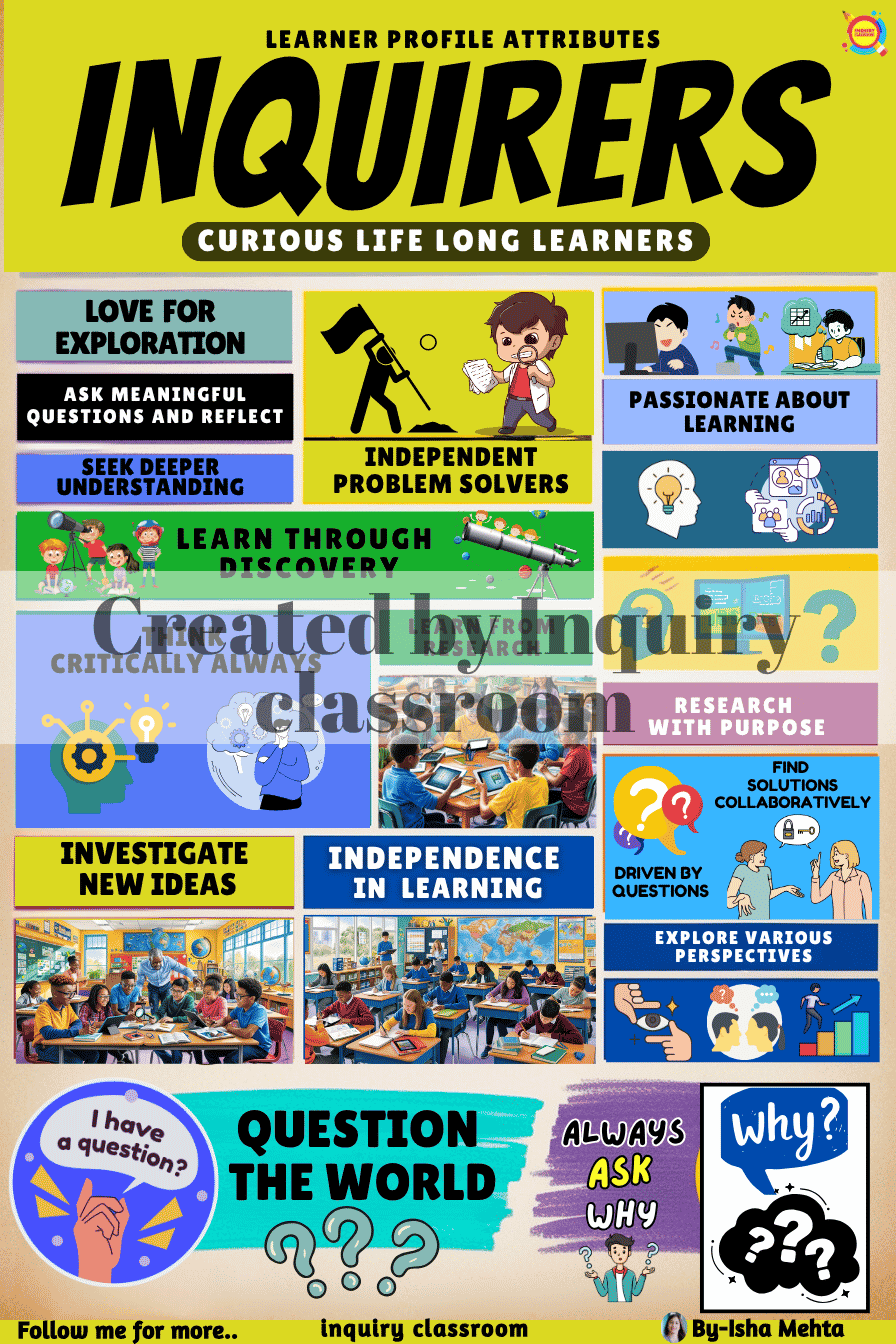
Inquirers develop a strong sense of curiosity and actively seek knowledge through questioning, research, and exploration. They are enthusiastic learners who develop deeper understanding through inquiry and meaningful learning experiences. In the IB PYP, inquiry means students learn by asking questions, exploring ideas, discussing their thinking, and building understanding through real experiences and investigations. Instead of only receiving information from the teacher, students actively participate in the learning process and construct meaning through curiosity and reflection.
𝑰𝒎𝒑𝒐𝒓𝒕𝒂𝒏𝒄𝒆:
This attribute nurtures lifelong learning by fostering independence, self-motivation, and a desire to explore beyond the classroom. It helps students become proactive problem-solvers who seek meaningful connections between ideas.
𝐈𝐦𝐩𝐥𝐞𝐦𝐞𝐧𝐭𝐚𝐭𝐢𝐨𝐧 𝐒𝐭𝐫𝐚𝐭𝐞𝐠𝐢𝐞𝐬 & 𝐄𝐱𝐚𝐦𝐩𝐥𝐞𝐬:
- Encouraging student-led inquiry projects where learners investigate topics of interest.
- Using provocations, visible thinking routines, and research activities to encourage questioning and exploration.
- Providing real-world challenges for students to explore through experimentation and collaboration.
𝟐. 𝐊𝐧𝐨𝐰𝐥𝐞𝐝𝐠𝐞𝐚𝐛𝐥e
Knowledgeable learners acquire and apply in-depth knowledge across a range of disciplines. They explore significant concepts, ideas, and issues that have both local and global importance. In the IB PYP, being knowledgeable does not mean simply memorizing facts. It means students develop understanding through inquiry, make connections between different subjects, and apply their learning to real-life situations and meaningful discussions.
𝑰𝒎𝒑𝒐𝒓𝒕𝒂𝒏𝒄𝒆:
This attribute helps learners develop a broad and balanced understanding of different subjects, enabling them to make informed decisions and contribute meaningfully to society.
𝐈𝐦𝐩𝐥𝐞𝐦𝐞𝐧𝐭𝐚𝐭𝐢𝐨𝐧 𝐒𝐭𝐫𝐚𝐭𝐞𝐠𝐢𝐞𝐬 & 𝐄𝐱𝐚𝐦𝐩𝐥𝐞𝐬:
- Encouraging cross-disciplinary learning through transdisciplinary themes.
- Providing inquiry and research opportunities that help students connect learning to real-world issues.
- Engaging students in discussions and debates on local and global topics.
𝟑. 𝐓𝐡𝐢𝐧𝐤𝐞𝐫s
Thinkers apply critical and creative thinking skills to analyze and solve problems. They approach challenges with logic and innovation. In the IB PYP, thinkers are encouraged to ask questions, consider different perspectives, make thoughtful decisions, and reflect on possible solutions. Students learn to use their thinking skills during discussions, inquiries, problem-solving tasks, and real-life learning experiences.
𝑰𝒎𝒑𝒐𝒓𝒕𝒂𝒏𝒄𝒆:
This attribute enables students to make reasoned decisions, consider multiple perspectives, and develop independent thinking and problem-solving abilities.
𝐈𝐦𝐩𝐥𝐞𝐦𝐞𝐧𝐭𝐚𝐭𝐢𝐨𝐧 𝐒𝐭𝐫𝐚𝐭𝐞𝐠𝐢𝐞𝐬 & 𝐄𝐱𝐚𝐦𝐩𝐥𝐞𝐬:
- Encouraging students to evaluate real-world issues and propose solutions.
- Using open-ended questioning and classroom discussions to deepen thinking.
- Integrating logic puzzles, design challenges, and hands-on problem-solving activities.
𝟒. 𝐂𝐨𝐦𝐦𝐮𝐧𝐢𝐜𝐚𝐭𝐨𝐫𝐬
Communicators express themselves confidently and effectively in multiple languages and through various modes of communication. They listen actively and engage in meaningful dialogue. In the IB PYP, communicators share their ideas, thoughts, and feelings through speaking, writing, drawing, presenting, and collaborating with others. Students also learn the importance of listening respectfully to different perspectives and expressing themselves clearly during discussions and inquiry activities.
𝑰𝒎𝒑𝒐𝒓𝒕𝒂𝒏𝒄𝒆:
This attribute fosters collaboration, empathy, and the ability to share ideas confidently and communicate effectively in different situations.
𝐈𝐦𝐩𝐥𝐞𝐦𝐞𝐧𝐭𝐚𝐭𝐢𝐨𝐧 𝐒𝐭𝐫𝐚𝐭𝐞𝐠𝐢𝐞𝐬 & 𝐄𝐱𝐚𝐦𝐩𝐥𝐞𝐬:
- Encouraging public speaking, presentations, and storytelling activities.
- Promoting active listening and respectful dialogue in classroom discussions.
- Utilizing visual, written, and digital communication tools to enhance expression.
𝟓. 𝐏𝐫𝐢𝐧𝐜𝐢𝐩𝐥𝐞d
Principled students act with integrity, fairness, and honesty. They take responsibility for their actions and respect the rights of others. In the IB PYP, being principled means students learn to make responsible choices, follow agreed expectations, and show honesty in their learning and behaviour. They understand the importance of treating others with fairness, respect, and empathy both inside and outside the classroom.
𝑰𝒎𝒑𝒐𝒓𝒕𝒂𝒏𝒄𝒆:
This attribute fosters ethical behavior and responsible decision-making, helping students develop a strong moral compass.
𝐈𝐦𝐩𝐥𝐞𝐦𝐞𝐧𝐭𝐚𝐭𝐢𝐨𝐧 𝐒𝐭𝐫𝐚𝐭𝐞𝐠𝐢𝐞𝐬 & 𝐄𝐱𝐚𝐦𝐩𝐥𝐞𝐬:
- Encouraging discussions on ethical dilemmas and responsible decision-making.
- Acknowledging and celebrating acts of honesty, fairness, and responsibility.
- Modeling principled behaviour as educators and school leaders.
𝟔. 𝐎𝐩𝐞𝐧-𝐦𝐢𝐧𝐝𝐞𝐝
Open-minded learners appreciate different perspectives, traditions, and cultures. They seek to understand and respect diverse viewpoints. In the IB PYP, open-minded students learn to listen to others with respect, value different ideas and experiences, and understand that people may think or live differently from them. Through inquiry and discussions, students develop empathy, broaden their perspectives, and become more internationally minded learners.
𝑰𝒎𝒑𝒐𝒓𝒕𝒂𝒏𝒄𝒆:
This attribute promotes inclusivity, global awareness, and helps students become respectful, globally minded, and adaptable learners.
𝐈𝐦𝐩𝐥𝐞𝐦𝐞𝐧𝐭𝐚𝐭𝐢𝐨𝐧 𝐒𝐭𝐫𝐚𝐭𝐞𝐠𝐢𝐞𝐬 & 𝐄𝐱𝐚𝐦𝐩𝐥𝐞𝐬:
- Providing learning experiences that explore different cultures and perspectives.
- Using stories, discussions, and perspective-taking activities to explore diverse viewpoints and experiences.
- Facilitating respectful discussions on social and cultural issues.
𝟕. 𝐂𝐚𝐫𝐢𝐧𝐠
Caring individuals show empathy, compassion, and respect. They are committed to making a positive impact on others and the environment. In the IB PYP, caring students learn to support others, build positive relationships, and take thoughtful actions that help their community and surroundings. They understand the importance of kindness, respect, and responsibility in everyday interactions and learning experiences.
𝑰𝒎𝒑𝒐𝒓𝒕𝒂𝒏𝒄𝒆:
This attribute fosters social responsibility and a sense of community, encouraging students to take meaningful action for the well-being of others.
𝐈𝐦𝐩𝐥𝐞𝐦𝐞𝐧𝐭𝐚𝐭𝐢𝐨𝐧 𝐒𝐭𝐫𝐚𝐭𝐞𝐠𝐢𝐞𝐬 & 𝐄𝐱𝐚𝐦𝐩𝐥𝐞𝐬:
- Organizing service-learning projects and community support activities.
- Encouraging acts of kindness and peer support within the classroom community.
- Modeling empathy, compassion, and care through daily interactions.
𝟖. 𝐑𝐢𝐬𝐤-𝐭𝐚𝐤𝐞𝐫s
Risk-takers approach unfamiliar situations with courage and resilience. They embrace challenges and new experiences with confidence. In the IB PYP, risk-takers are encouraged to try new ideas, share their thinking openly, and step out of their comfort zones during learning experiences. Students learn that making mistakes is a natural part of learning and helps them grow in confidence, independence, and resilience.
This attribute helps students develop perseverance, adaptability, and confidence when trying new experiences and facing challenges.
𝐈𝐦𝐩𝐥𝐞𝐦𝐞𝐧𝐭𝐚𝐭𝐢𝐨𝐧 𝐒𝐭𝐫𝐚𝐭𝐞𝐠𝐢𝐞𝐬 & 𝐄𝐱𝐚𝐦𝐩𝐥𝐞𝐬:
- Encouraging students to step out of their comfort zones (e.g., public speaking, leadership roles).
- Providing opportunities for exploration, experimentation, and learning through mistakes
- Celebrating effort, reflection, and growth throughout the learning process.
𝟗. 𝐁𝐚𝐥𝐚𝐧𝐜𝐞𝐝
Balanced learners maintain physical, emotional, and intellectual well-being. They understand the importance of a well-rounded lifestyle. In the IB PYP, balanced students learn to manage different aspects of their lives, including learning, relationships, play, health, and rest. They understand that maintaining balance helps them stay healthy, focused, and prepared to participate positively in both school and everyday life.
𝑰𝒎𝒑𝒐𝒓𝒕𝒂𝒏𝒄𝒆:
This attribute promotes self-care, stress management, overall well-being, and healthy lifestyle habits.
𝐈𝐦𝐩𝐥𝐞𝐦𝐞𝐧𝐭𝐚𝐭𝐢𝐨𝐧 𝐒𝐭𝐫𝐚𝐭𝐞𝐠𝐢𝐞𝐬 & 𝐄𝐱𝐚𝐦𝐩𝐥𝐞𝐬:
- Encouraging mindfulness activities and self-reflection.
- Promoting extracurricular activities and time management skills.
- Teaching students the importance of maintaining mental and physical health.
𝟏𝟎. 𝐑𝐞𝐟𝐥𝐞𝐜𝐭𝐢𝐯𝐞
Reflective learners thoughtfully consider their learning experiences and personal growth. They assess strengths and areas for improvement. In the IB PYP, reflective students think about what they have learned, how they learned it, and what they can improve moving forward. Reflection helps students become more aware of their progress, learning strategies, and personal goals, supporting continuous growth and development.
𝑰𝒎𝒑𝒐𝒓𝒕𝒂𝒏𝒄𝒆:
This attribute fosters self-awareness, goal-setting, and continuous growth and development.
𝐈𝐦𝐩𝐥𝐞𝐦𝐞𝐧𝐭𝐚𝐭𝐢𝐨𝐧 𝐒𝐭𝐫𝐚𝐭𝐞𝐠𝐢𝐞𝐬 & 𝐄𝐱𝐚𝐦𝐩𝐥𝐞𝐬:
- Using learning journals and portfolios for self-reflection.
- Encouraging students to set and evaluate personal and academic goals.
- Providing regular opportunities for feedback and self-assessment.
𝐈𝐧𝐭𝐞𝐠𝐫𝐚𝐭𝐢𝐨𝐧 𝐨𝐟 𝐋𝐞𝐚𝐫𝐧𝐞𝐫 𝐏𝐫𝐨𝐟𝐢𝐥𝐞 𝐀𝐭𝐭𝐫𝐢𝐛𝐮𝐭𝐞𝐬 𝐢𝐧 𝐭𝐡𝐞 𝐏𝐘𝐏 𝐅𝐫𝐚𝐦𝐞𝐰𝐨𝐫𝐤
𝐓𝐫𝐚𝐧𝐬𝐝𝐢𝐬𝐜𝐢𝐩𝐥𝐢𝐧𝐚𝐫𝐲 𝐋𝐞𝐚𝐫𝐧𝐢𝐧𝐠
The PYP framework emphasizes transdisciplinary learning, where the Learner Profile attributes are embedded into all subject areas and learning experiences. This approach helps students make connections across disciplines and apply their attributes in meaningful ways.
𝙀𝙭𝙖𝙢𝙥𝙡𝙚: A unit on environmental sustainability can encourage students to be Inquirers (researching climate change), Caring (understanding their responsibility towards the planet), and Thinkers (developing innovative solutions for sustainability).
𝐀𝐬𝐬𝐞𝐬𝐬𝐦𝐞𝐧𝐭 𝐚𝐧𝐝 𝐑𝐞𝐟𝐥𝐞𝐜𝐭𝐢𝐨𝐧
Regular assessment and reflection help students recognize and develop their Learner Profile attributes. Educators should use formative and summative assessments to provide feedback on how students are demonstrating these attributes.
𝙀𝙭𝙖𝙢𝙥𝙡𝙚: Reflective Journals: Students maintain journals to document their learning experiences, identify attributes they used, and set personal goals for growth.
𝐂𝐥𝐚𝐬𝐬𝐫𝐨𝐨𝐦 𝐂𝐮𝐥𝐭𝐮𝐫𝐞 𝐚𝐧𝐝 𝐄𝐧𝐯𝐢𝐫𝐨𝐧𝐦𝐞𝐧𝐭
Creating a classroom environment that encourages the Learner Profile attributes ensures that students internalize these qualities as part of their daily interactions.
𝙀𝙭𝙖𝙢𝙥𝙡𝙚: Teachers model attributes like Principled decision-making and Open-minded discussions to create a respectful and inclusive learning space.
𝐏𝐫𝐚𝐜𝐭𝐢𝐜𝐚𝐥 𝐀𝐩𝐩𝐥𝐢𝐜𝐚𝐭𝐢𝐨𝐧𝐬 𝐚𝐧𝐝 𝐄𝐱𝐚𝐦𝐩𝐥𝐞𝐬
To bring the Learner Profile attributes to life, educators can incorporate them into school-wide initiatives, classroom discussions, and learning engagements.
𝙀𝙭𝙖𝙢𝙥𝙡𝙚: A Risk-taker challenge where students try new experiences, such as presenting in front of an audience or learning a new skill outside their comfort zone.
𝐂𝐨𝐧𝐜𝐥𝐮𝐬𝐢𝐨𝐧
The Learner Profile attributes are at the heart of the IB PYP framework, shaping students into responsible, reflective, and engaged global citizens. By intentionally integrating these attributes into teaching and learning, educators empower students to develop essential life skills and contribute meaningfully to the world around them. By fostering these attributes in the classroom, we prepare learners not just for academic success but for a lifetime of thoughtful action and inquiry.
Grab these colorful IB PYP Learner Profile Attributes posters, available in both English and Spanish.