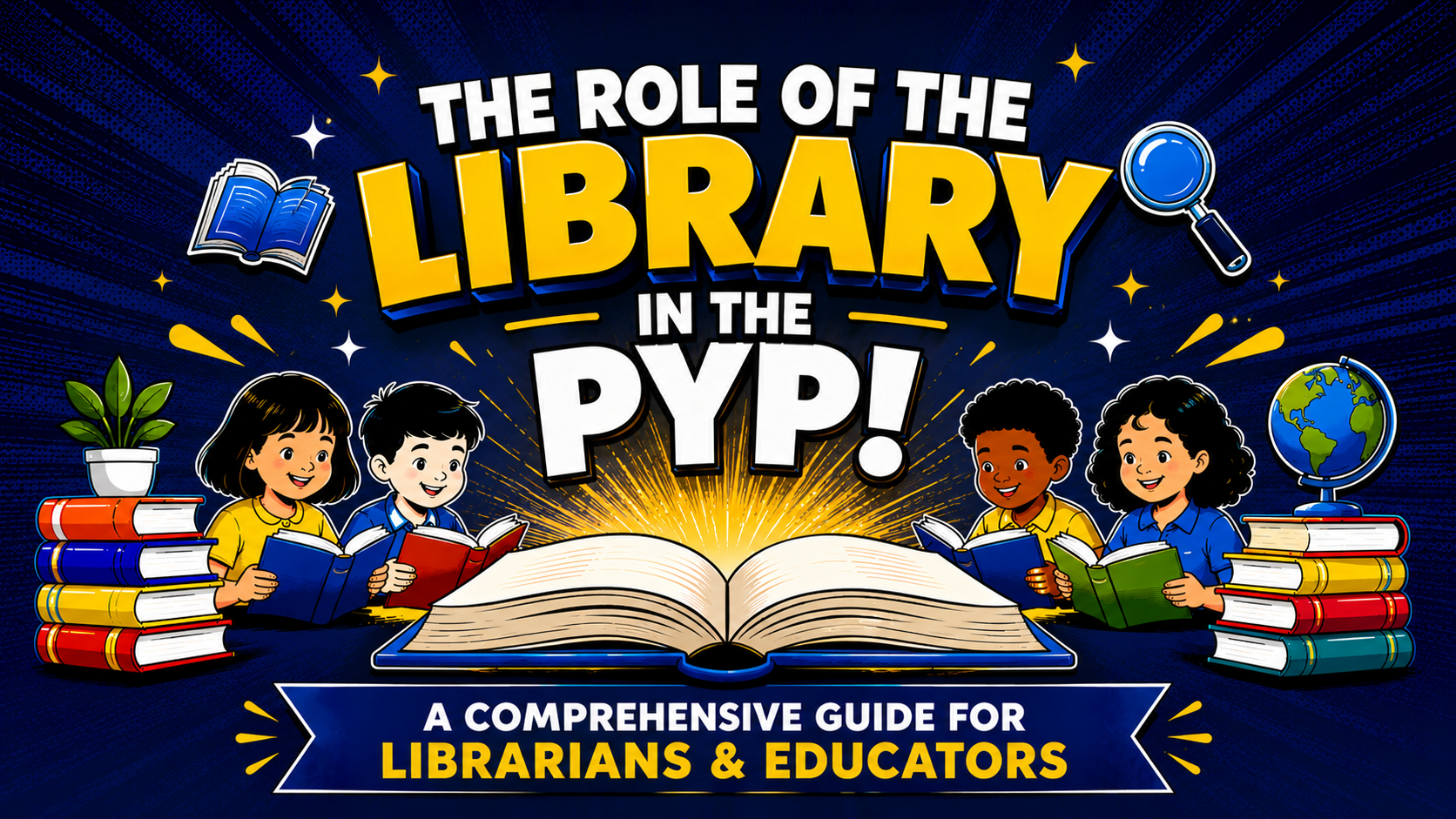
The library in the IB PYP is far more than a room filled with books – it is a dynamic learning center, a hub for inquiry, and a cornerstone of international-mindedness. For many new librarians, understanding how to integrate the PYP curriculum, support teaching and learning, and develop their own professional practice can be daunting. This guide aims to demystify the role of the library and librarian in the PYP, providing practical strategies, clear examples, and actionable steps for success.
𝟭. 𝗧𝗵𝗲 𝗥𝗼𝗹𝗲 𝗼𝗳 𝘁𝗵𝗲 𝗟𝗶𝗯𝗿𝗮𝗿𝗶𝗮𝗻 in the IB PYP
𝗞𝗲𝘆 𝗥𝗲𝘀𝗽𝗼𝗻𝘀𝗶𝗯𝗶𝗹𝗶𝘁𝗶𝗲𝘀:
- Learning Center Management: Oversee daily library operations, maintain an up-to-date and relevant collection, and ensure a welcoming, inclusive environment for all students and staff.
- Resource Specialist: Curate, catalog, and recommend resources that support the PYP curriculum, including print, digital, and multimedia materials.
- Teaching Partner: Collaborate with teachers to plan and deliver lessons that build research, information literacy, and inquiry skills.
- Curriculum Integrator: Map library resources to the Programme of Inquiry (POI), ensuring every unit and transdisciplinary theme is supported by rich, diverse materials.
- Professional Growth: Stay current with best practices, new technologies, and educational research to continually improve library services.
- Community Builder: Promote reading, organize events (author visits, reading challenges), and foster a culture of inquiry and international-mindedness.
𝟮. 𝗜𝗻𝘁𝗲𝗴𝗿𝗮𝘁𝗶𝗻𝗴 𝘁𝗵𝗲 𝗟𝗶𝗯𝗿𝗮𝗿𝘆 𝘄𝗶𝘁𝗵 𝘁𝗵𝗲 𝗣𝗬𝗣 𝗖𝘂𝗿𝗿𝗶𝗰𝘂𝗹𝘂𝗺
𝗔. 𝗨𝗻𝗱𝗲𝗿𝘀𝘁𝗮𝗻𝗱𝗶𝗻𝗴 𝘁𝗵𝗲 𝗣𝗢𝗜 𝗮𝗻𝗱 𝗧𝗿𝗮𝗻𝘀𝗱𝗶𝘀𝗰𝗶𝗽𝗹𝗶𝗻𝗮𝗿𝘆 𝗧𝗵𝗲𝗺𝗲𝘀
The PYP curriculum is structured around six transdisciplinary themes that connect learning across subjects and grade levels. As a librarian, your first step is to review the POI and identify how the library can support each unit.
𝗜𝗻𝗾𝘂𝗶𝗿𝘆-𝗕𝗮𝘀𝗲𝗱, 𝗥𝗲𝗮𝗱𝗶𝗻𝗴-𝗙𝗼𝗰𝘂𝘀𝗲𝗱 𝗟𝗲𝗮𝗿𝗻𝗶𝗻𝗴 𝗘𝗻𝗴𝗮𝗴𝗲𝗺𝗲𝗻𝘁𝘀 (𝗕𝘆 𝗚𝗿𝗮𝗱𝗲 & 𝗧𝗗 𝗧𝗵𝗲𝗺𝗲)

𝗕. 𝗠𝗮𝗽𝗽𝗶𝗻𝗴 𝗥𝗲𝘀𝗼𝘂𝗿𝗰𝗲𝘀 𝗮𝗻𝗱 𝗦𝗸𝗶𝗹𝗹𝘀
- Resource Alignment: For each unit, select books, databases, and digital tools that deepen inquiry and promote student agency.
- ATL Skills Integration: Plan library sessions that explicitly teach Approaches to Learning (ATL) skills such as research, thinking, communication, and self-management.
- Collaborative Planning: Join grade-level meetings to co-design learning experiences and assessments that leverage library resources and expertise.
𝗘𝘅𝗮𝗺𝗽𝗹𝗲 𝗧𝗮𝗯𝗹𝗲: 𝗟𝗶𝗯𝗿𝗮𝗿𝘆 𝗦𝘂𝗽𝗽𝗼𝗿𝘁 𝗳𝗼𝗿 𝗣𝗬𝗣 𝗨𝗻𝗶𝘁𝘀 (𝗕𝘆 𝗚𝗿𝗮𝗱𝗲 & 𝗧𝗵𝗲𝗺𝗲)

𝟯. 𝗣𝗿𝗮𝗰𝘁𝗶𝗰𝗮𝗹 𝗦𝘁𝗿𝗮𝘁𝗲𝗴𝗶𝗲𝘀 𝗳𝗼𝗿 𝗟𝗶𝗯𝗿𝗮𝗿𝗶𝗮𝗻𝘀

𝟰. 𝗛𝗼𝘄 𝗪𝗶𝗹𝗹 𝘁𝗵𝗲 𝗟𝗶𝗯𝗿𝗮𝗿𝘆 𝗟𝗼𝗼𝗸 𝗟𝗶𝗸𝗲? (𝗗𝗲𝘀𝗶𝗴𝗻𝗶𝗻𝗴 𝗮𝗻 𝗜𝗻𝗾𝘂𝗶𝗿𝘆-𝗗𝗿𝗶𝘃𝗲𝗻, 𝗜𝗕-𝗔𝗹𝗶𝗴𝗻𝗲𝗱 𝗦𝗽𝗮𝗰𝗲)
The ideal PYP library is organized to support inquiry, multiliteracies, and the IB essential elements. Stations and displays are clearly labelled by transdisciplinary theme and age group, making resources accessible and visible for all learners.
𝗦𝗮𝗺𝗽𝗹𝗲 𝗟𝗶𝗯𝗿𝗮𝗿𝘆 𝗭𝗼𝗻𝗲𝘀 𝗮𝗻𝗱 𝗦𝘁𝗮𝘁𝗶𝗼𝗻𝘀

𝗜𝗕 𝗘𝘀𝘀𝗲𝗻𝘁𝗶𝗮𝗹 𝗘𝗹𝗲𝗺𝗲𝗻𝘁𝘀 𝗗𝗶𝘀𝗽𝗹𝗮𝘆𝗲𝗱:
- Learner Profile Attributes (LPA): Posters, student reflections, and book pairings.
- ATL Skills: Visuals, checklists, and self-assessment tools.
- Key Concepts: Question prompts and inquiry charts.
- Transdisciplinary Themes: Clearly labelled book bins and displays.
- Action: Student projects, service initiatives, and community impact boards.
𝟱. 𝗔 𝗖𝗼𝗿𝗻𝗲𝗿 𝗳𝗼𝗿 𝗧𝗲𝗮𝗰𝗵𝗲𝗿𝘀: 𝗜𝗕 𝗥𝗲𝘀𝗼𝘂𝗿𝗰𝗲 & 𝗖𝗼𝗹𝗹𝗮𝗯𝗼𝗿𝗮𝘁𝗶𝗼𝗻 𝗛𝘂𝗯
Create a dedicated space in the library for teachers to easily access:
- IB-related documents: Hard copies of the latest IB PYP framework, subject guides, and policy documents.
- Professional Development (PD) Books: Latest titles on inquiry, assessment, differentiation, and international education.
- Planning Resources: Unit planners, collaboration logs, and resource lists.
- Collaboration Board: Space for sharing ideas, scheduling co-teaching sessions, and posting upcoming IB events or PD opportunities.
𝗔𝗱𝗱𝗶𝘁𝗶𝗼𝗻𝗮𝗹 𝗙𝗲𝗮𝘁𝘂𝗿𝗲𝘀:
- Digital access to IB resources and curated online PD modules.
- Archive of past PYP Exhibition projects and student portfolios for reference.
𝟲. 𝗣𝗿𝗮𝗰𝘁𝗶𝗰𝗮𝗹 𝗘𝘅𝗮𝗺𝗽𝗹𝗲𝘀: 𝗟𝗶𝗯𝗿𝗮𝗿𝘆 𝗔𝗰𝘁𝗶𝘃𝗶𝘁𝗶𝗲𝘀 𝗳𝗼𝗿 𝗘𝗮𝗰𝗵 𝗚𝗿𝗮𝗱𝗲

f
𝟳. 𝗦𝘂𝗽𝗽𝗼𝗿𝘁𝗶𝗻𝗴 𝗔𝗧𝗟 𝗦𝗸𝗶𝗹𝗹𝘀 𝗮𝗻𝗱 𝘁𝗵𝗲 𝗟𝗲𝗮𝗿𝗻𝗲𝗿 𝗣𝗿𝗼𝗳𝗶𝗹𝗲
The library is a prime space for developing Approaches to Learning (ATL) skills and nurturing the IB Learner Profile. Librarians explicitly teach and model these skills through research projects, inquiry-based activities, and reading programs.
𝗔𝗧𝗟 𝗦𝗸𝗶𝗹𝗹 𝗗𝗲𝘃𝗲𝗹𝗼𝗽𝗺𝗲𝗻𝘁 𝘁𝗵𝗿𝗼𝘂𝗴𝗵 𝘁𝗵𝗲 𝗟𝗶𝗯𝗿𝗮𝗿𝘆
The library plays an essential role in explicitly teaching:
- Research skills (skimming, sourcing, citing)
- Communication (reporting, presenting)
- Self-management (planning and reflecting)

Practical Example: During the PYP Exhibition, librarians run citation workshops and curate digital collections tailored to students’ inquiry topics.
𝟴. 𝗜𝗻𝗰𝗹𝘂𝘀𝗶𝘃𝗲 𝗮𝗻𝗱 𝗚𝗹𝗼𝗯𝗮𝗹𝗹𝘆-𝗠𝗶𝗻𝗱𝗲𝗱 𝗖𝗼𝗹𝗹𝗲𝗰𝘁𝗶𝗼𝗻𝘀
A PYP library must reflect the diversity of the school and the world. This includes:
- Books in multiple languages
- Stories from a variety of cultures, perspectives, and identities
- Resources that support all genders, values, and lifestyles
- Materials that address global issues and promote international-mindedness

Practical Example: Librarians display books in multiple languages and invite parents to read aloud in their home language on World Book Day, promoting multilingualism and cultural pride.
𝟵. 𝗔𝘀𝘀𝗲𝘀𝘀𝗺𝗲𝗻𝘁 𝗮𝗻𝗱 𝗥𝗲𝗳𝗹𝗲𝗰𝘁𝗶𝗼𝗻 𝗶𝗻 𝘁𝗵𝗲 𝗟𝗶𝗯𝗿𝗮𝗿𝘆
Assessment in the library is ongoing and formative, focusing on skill development and student growth. Librarians use:
- Inquiry journals: Students track their research process and ATL growth.
- Peer reviews: Classmates provide feedback on presentations or projects.
- Exit tickets: Students reflect on what they learned in each session.
Practical Example: Students use inquiry journals to reflect on their research process and set new goals for future projects.
𝟭𝟬. 𝗟𝗶𝗯𝗿𝗮𝗿𝗶𝗮𝗻’𝘀 𝗥𝗼𝗹𝗲 𝗶𝗻 𝗣𝗬𝗣 𝗘𝘅𝗵𝗶𝗯𝗶𝘁𝗶𝗼𝗻
In the Exhibition process, librarians:
- Run workshops on research, citations, and media literacy
- Curate inquiry-specific collections
- Support final presentations with digital tools
𝗧𝗮𝗯𝗹𝗲: 𝗘𝘅𝗵𝗶𝗯𝗶𝘁𝗶𝗼𝗻 𝗦𝘂𝗽𝗽𝗼𝗿𝘁 𝗔𝗿𝗲𝗮𝘀

𝟭𝟭. 𝗧𝗲𝗰𝗵𝗻𝗼𝗹𝗼𝗴𝘆 & 𝗗𝗶𝗴𝗶𝘁𝗮𝗹 𝗟𝗶𝘁𝗲𝗿𝗮𝗰𝘆
Librarians integrate technology by:
- Teaching digital research tools
- Instructing safe and ethical internet use
- Introducing citation and paraphrasing tools
Example: Students explored Britannica School for reliable research, learned to paraphrase, and used citation generators to credit sources.
𝟭𝟯. 𝗣𝗿𝗼𝗳𝗲𝘀𝘀𝗶𝗼𝗻𝗮𝗹 𝗚𝗿𝗼𝘄𝘁𝗵 𝗮𝗻𝗱 𝗙𝘂𝘁𝘂𝗿𝗲-𝗥𝗲𝗮𝗱𝘆 𝗟𝗶𝗯𝗿𝗮𝗿𝗶𝗲𝘀
𝗧𝗼 𝗿𝗲𝗺𝗮𝗶𝗻 𝗲𝗳𝗳𝗲𝗰𝘁𝗶𝘃𝗲, 𝗹𝗶𝗯𝗿𝗮𝗿𝗶𝗮𝗻𝘀 𝗺𝘂𝘀𝘁:
- Attend IB and library-specific professional development.
- Join global educator networks and read professional journals.
- Evolve the library into a makerspace, virtual collaboration zone, and multimedia learning center.
Practical Example: A librarian introduces coding clubs and digital storytelling workshops, ensuring the library remains a hub for future-ready skills.
𝟭𝟰. 𝗖𝗼𝗹𝗹𝗮𝗯𝗼𝗿𝗮𝘁𝗶𝗼𝗻 𝘄𝗶𝘁𝗵 𝗧𝗲𝗮𝗰𝗵𝗲𝗿𝘀
Librarians work with educators to:
- Plan concept-driven lessons
- Conduct co-teaching sessions
- Share student progress and formative data
Example: Grade 5 teacher and librarian jointly led a novel study of “A Long Walk to Water,” connected to a unit on access to resources.
𝟭𝟱. 𝗛𝗼𝘄 𝘁𝗼 𝗣𝗿𝗮𝗰𝘁𝗶𝗰𝗲 𝗮𝗻𝗱 𝗚𝗿𝗼𝘄 𝗮𝘀 𝗮 𝗣𝗬𝗣 𝗟𝗶𝗯𝗿𝗮𝗿𝗶𝗮𝗻
- Start with Inquiry: Design library sessions that begin with student questions and encourage exploration.
- Model ATL Skills: Teach and model how to locate, evaluate, and use information ethically and effectively.
- Promote Transdisciplinary Learning: Use books and resources that cross subject boundaries and connect to real-world issues.
- Reflect and Adapt: Seek feedback from students and teachers, and adjust library programs to better meet their needs.
- Network and Learn: Join professional librarian communities, attend IB workshops, and stay updated on international best practices
𝟭𝟲. 𝗙𝗶𝗻𝗮𝗹 𝗔𝗱𝘃𝗶𝗰𝗲 𝗳𝗼𝗿 𝗡𝗲𝘄 𝗣𝗬𝗣 𝗟𝗶𝗯𝗿𝗮𝗿𝗶𝗮𝗻𝘀
- Be proactive: Reach out to teachers, join curriculum meetings, and offer your expertise.
- Be organized: Use tables, resource lists, and digital tools to keep your library aligned with the POI and accessible to all.
- Be reflective: Regularly assess your impact and seek ways to improve.
- Be passionate: Your enthusiasm for inquiry, reading, and international-mindedness will inspire your school community.
𝟭𝟳. 𝗔𝗽𝗽𝗲𝗻𝗱𝗶𝘅: 𝗦𝘂𝗯𝗷𝗲𝗰𝘁-𝗪𝗶𝘀𝗲 𝗕𝗼𝗼𝗸 𝗥𝗲𝗰𝗼𝗺𝗺𝗲𝗻𝗱𝗮𝘁𝗶𝗼𝗻𝘀 𝗯𝘆 𝗚𝗿𝗮𝗱𝗲 (𝗣𝗿𝗲-𝗞 𝘁𝗼 𝗚𝗿𝗮𝗱𝗲 𝟱)
Below are five top, internationally recognized books for each subject and grade, supporting inquiry-based, reading-focused engagements in line with the IB PYP framework
𝗔. 𝗘𝗻𝗴𝗹𝗶𝘀𝗵

𝗕. 𝗠𝗮𝘁𝗵𝗲𝗺𝗮𝘁𝗶𝗰𝘀

𝗖. 𝗦𝗰𝗶𝗲𝗻𝗰𝗲

𝗗. 𝗦𝗼𝗰𝗶𝗮𝗹 𝗦𝘁𝘂𝗱𝗶𝗲𝘀

𝗘. 𝗔𝗿𝘁𝘀

𝟭𝟴. 𝗣𝗬𝗣 𝗜𝗻𝗱𝗶𝗮𝗻 𝗔𝘂𝘁𝗵𝗼𝗿 𝗕𝗼𝗼𝗸𝗹𝗶𝘀𝘁 (𝗕𝘆 𝗔𝗴𝗲 𝗚𝗿𝗼𝘂𝗽, 𝗦𝘂𝗯𝗷𝗲𝗰𝘁 & 𝗧𝗵𝗲𝗺𝗲)

𝗖𝗼𝗻𝗰𝗹𝘂𝘀𝗶𝗼𝗻
The PYP librarian is a leader, collaborator, and innovator. By understanding your multifaceted role, actively integrating the library with the curriculum, supporting ATL skills, and continually developing your collection and practice, you transform the library into a thriving center of inquiry and learning for all.