

𝗜𝗻𝘁𝗿𝗼𝗱𝘂𝗰𝘁𝗶𝗼𝗻: 𝗪𝗵𝘆 𝗜𝗖𝗧 𝗠𝗮𝘁𝘁𝗲𝗿𝘀 𝗶𝗻 𝘁𝗵𝗲 𝗣𝗬𝗣
ICT in the IB PYP plays a vital role in developing inquiry, creativity, collaboration, and digital citizenship. Through authentic learning experiences, students build research, communication, and problem-solving skills needed for a rapidly changing world. ICT is not isolated but is woven into Units of Inquiry (UOI), supporting authentic, meaningful, and relevant learning experiences.
ICT empowers students to embody IB Learner Profile attributes such as being inquirers, thinkers, communicators, and principled digital citizens. This approach ensures students are ready to thrive in a rapidly changing, interconnected world.
𝟭. 𝗞𝗲𝘆 𝗣𝗿𝗶𝗻𝗰𝗶𝗽𝗹𝗲𝘀 𝗼𝗳 𝗜𝗖𝗧 𝗶𝗻 𝘁𝗵𝗲 𝗣𝗬𝗣
Key principles define how ICT is approached in the PYP, ensuring technology is used to enhance learning, support authentic inquiry, and develop skills in a progressive way.
- Integration, Not Isolation: ICT is a tool to enhance learning across all areas, not a standalone subject.
- Authentic Contexts: Technology is used in real-world, age-appropriate ways, from Pre-K to Grade 5, supporting inquiry and conceptual understanding.
- Skill Progression: Students build ICT skills sequentially, from basic device use to coding, research, and digital citizenship.
𝟮. 𝗧𝗵𝗲 𝗦𝗶𝘅 𝗢𝘃𝗲𝗿𝗮𝗿𝗰𝗵𝗶𝗻𝗴 𝗘𝗹𝗲𝗺𝗲𝗻𝘁𝘀 𝗼𝗳 𝗜𝗖𝗧 𝗶𝗻 𝘁𝗵𝗲 𝗣𝗬𝗣
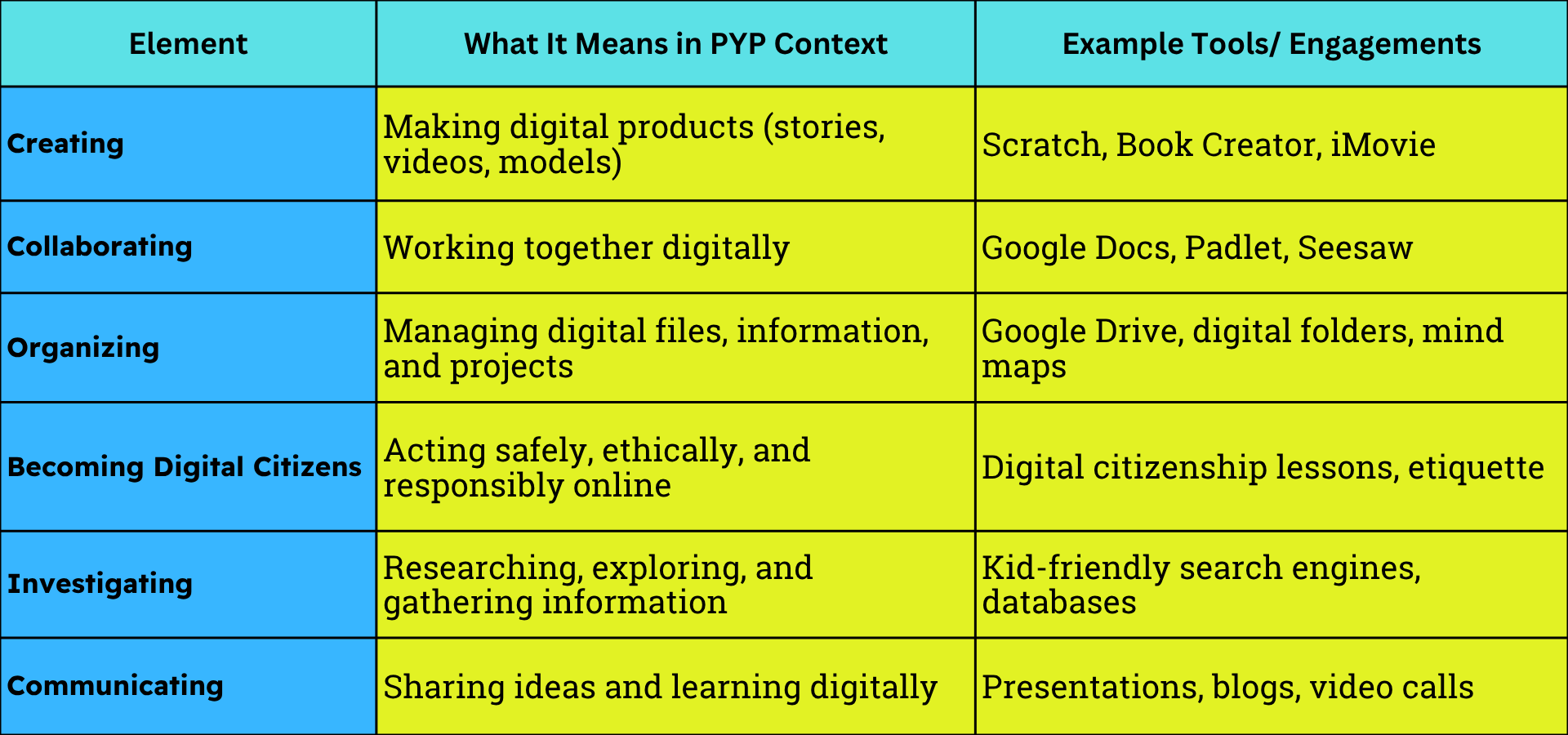
ICT learning in the PYP is organized around six essential elements, each representing a different way students interact with technology. The table describes each element, its significance in the PYP, and practical examples of digital tools or engagements that bring these elements to life.
 d
d
𝟰. 𝗖𝗼𝗻𝗰𝗲𝗽𝘁𝘀 𝗮𝗻𝗱 𝗦𝗸𝗶𝗹𝗹𝘀 𝗶𝗻 𝗜𝗖𝗧 (𝘄𝗶𝘁𝗵 𝗖𝗹𝗮𝘀𝘀𝗿𝗼𝗼𝗺 𝗘𝘅𝗮𝗺𝗽𝗹𝗲𝘀)
Concepts and skills form the backbone of ICT learning in the PYP. Key concepts connect technology to big ideas, while skills progression ensures students develop the competencies needed for confident, ethical, and creative digital engagement.
𝗮. 𝗞𝗲𝘆 𝗖𝗼𝗻𝗰𝗲𝗽𝘁𝘀 𝗶𝗻 𝗜𝗖𝗧
This table links each concept to its application in ICT and real classroom examples.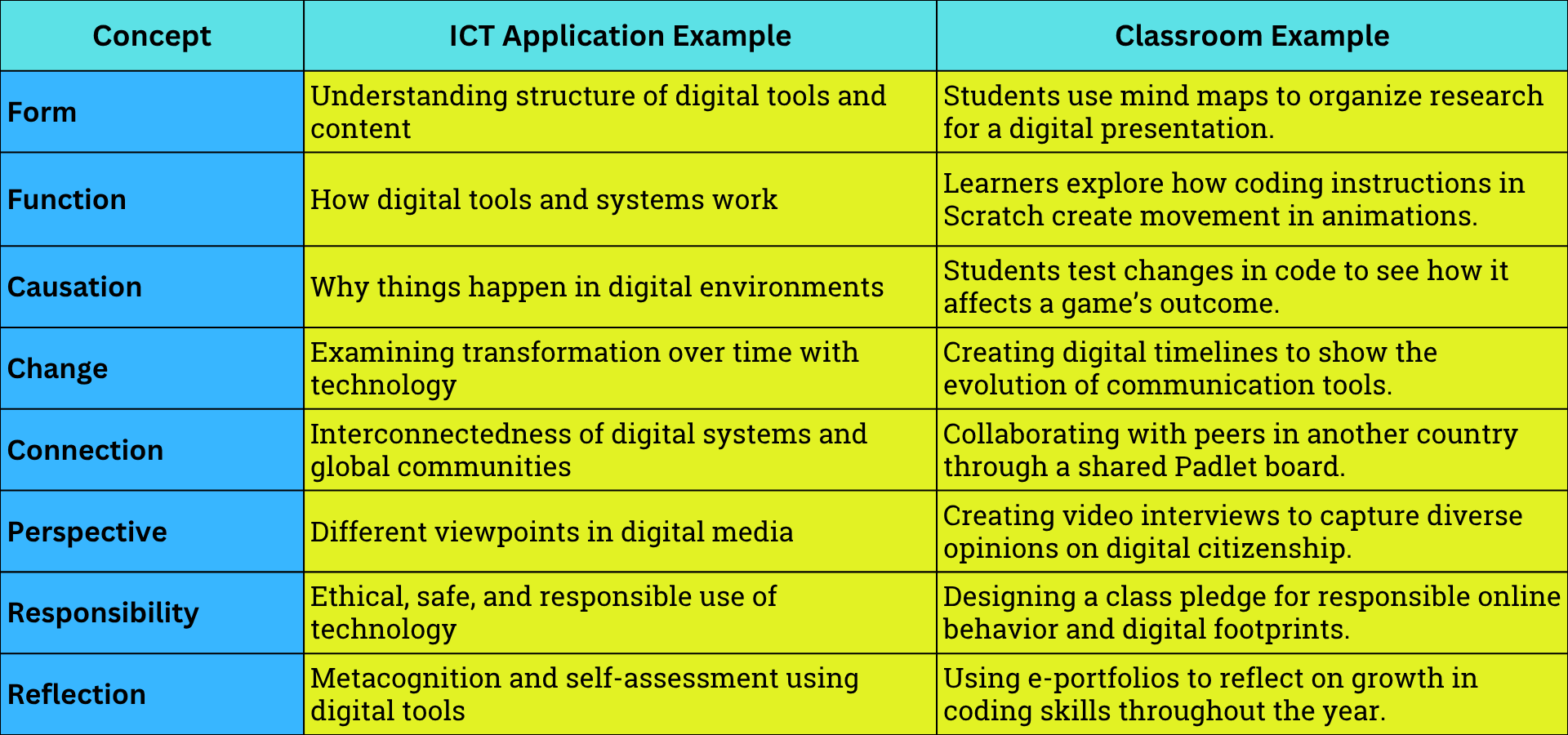
𝗯. 𝗜𝗖𝗧 𝗦𝗸𝗶𝗹𝗹𝘀 𝗣𝗿𝗼𝗴𝗿𝗲𝘀𝘀𝗶𝗼𝗻 (𝘄𝗶𝘁𝗵 𝗘𝘅𝗮𝗺𝗽𝗹𝗲𝘀)
This table outlines how ICT skills develop from Pre-K to Grade 5, including the tools used and authentic classroom scenarios.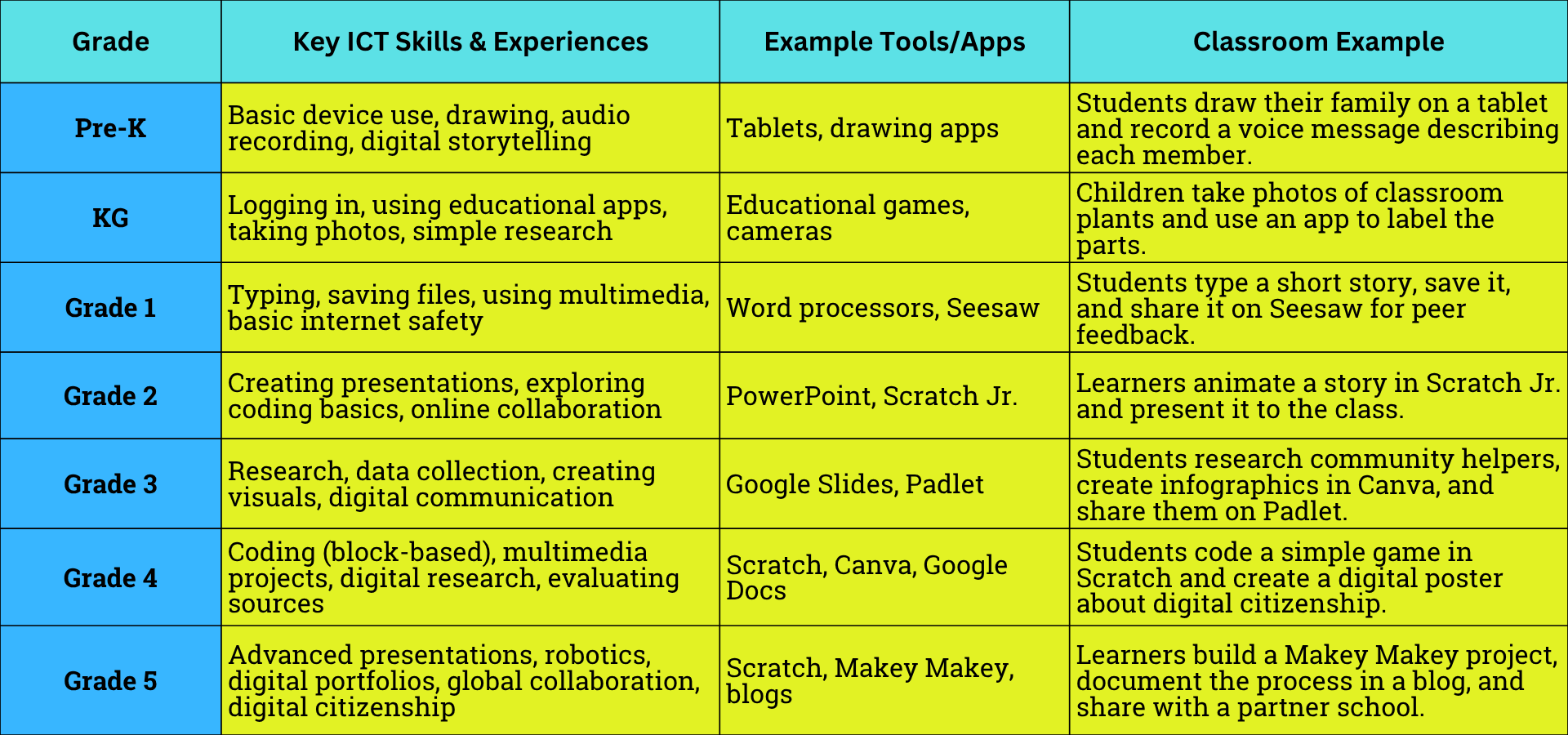
𝗯. 𝗔𝗽𝗽𝗿𝗼𝗮𝗰𝗵𝗲𝘀 𝘁𝗼 𝗟𝗲𝗮𝗿𝗻𝗶𝗻𝗴 (𝗔𝗧𝗟) 𝗦𝗸𝗶𝗹𝗹𝘀 𝗧𝗵𝗿𝗼𝘂𝗴𝗵 𝗜𝗖𝗧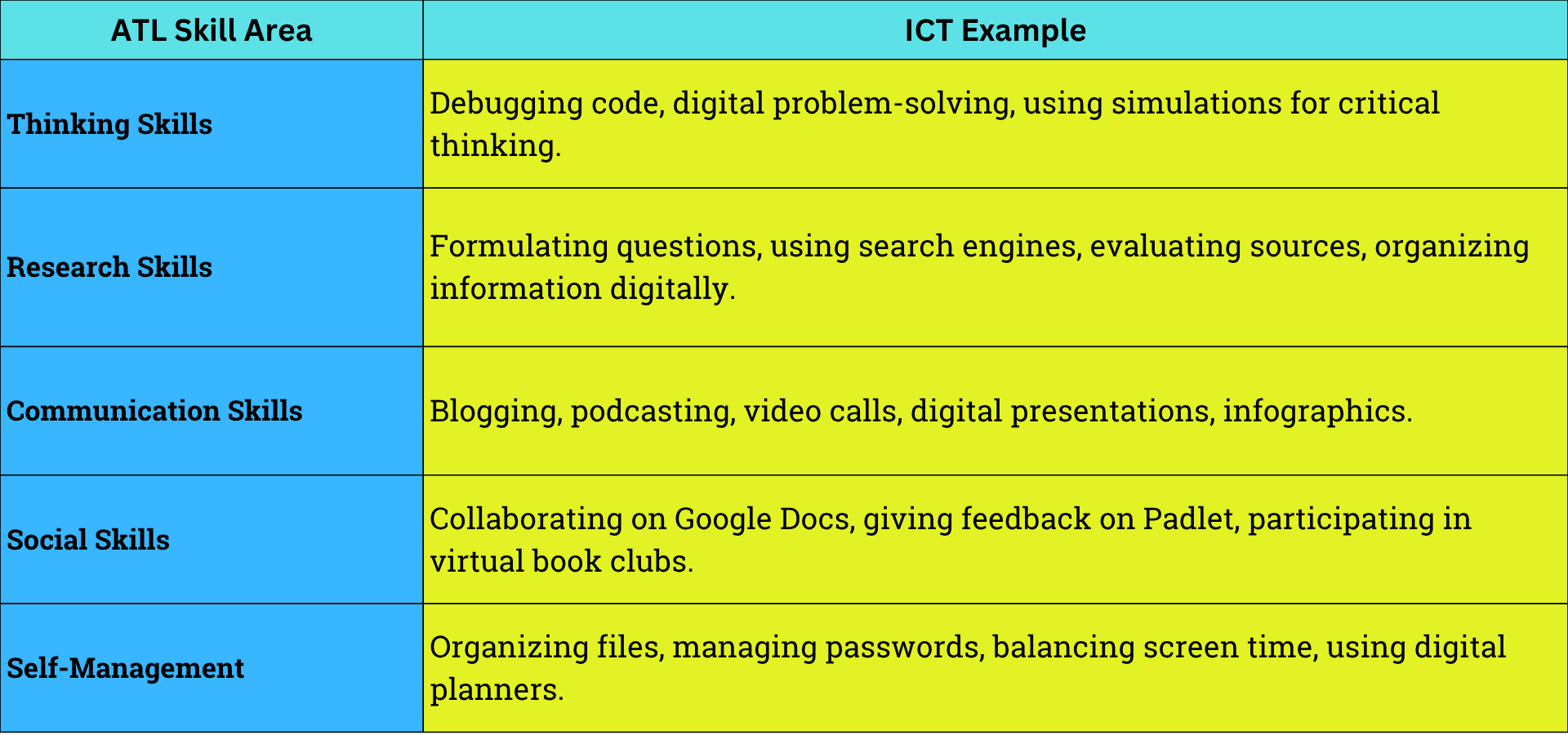
ICT is embedded in every Unit of Inquiry, supporting student inquiry and meaningful action. The table provides grade-specific examples of how technology enhances learning in each UOI, illustrating the diversity of digital engagements and the ways technology supports transdisciplinary learning.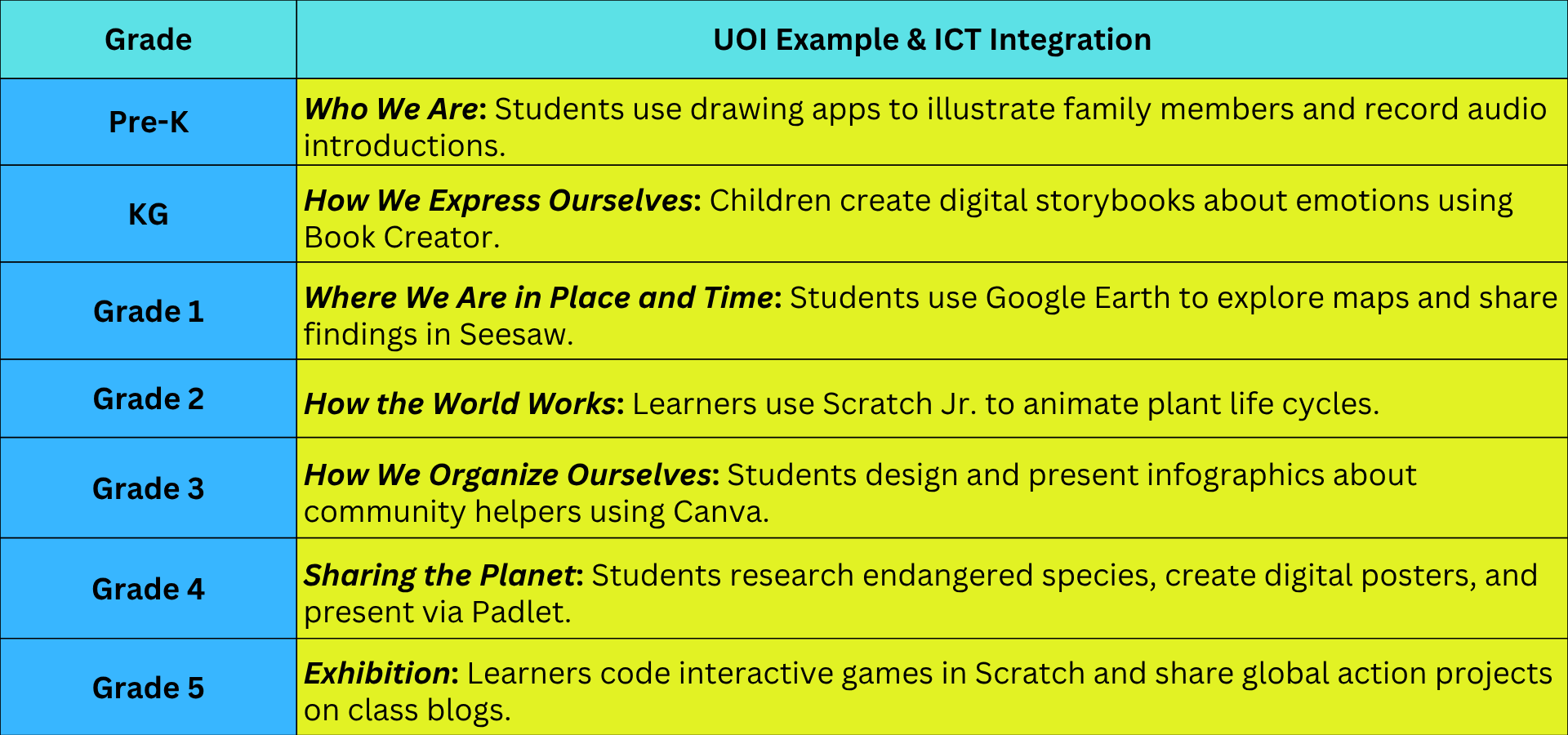 fg
fg
𝟲. 𝗜𝗖𝗧 𝗮𝗻𝗱 𝘁𝗵𝗲 𝗜𝗕 𝗟𝗲𝗮𝗿𝗻𝗲𝗿 𝗣𝗿𝗼𝗳𝗶𝗹𝗲
ICT supports the development of all IB PYP Learner Profile attributes, helping students grow as internationally minded learners. The table links each attribute to specific ICT practices and classroom engagements, providing practical ideas for fostering holistic student growth through technology.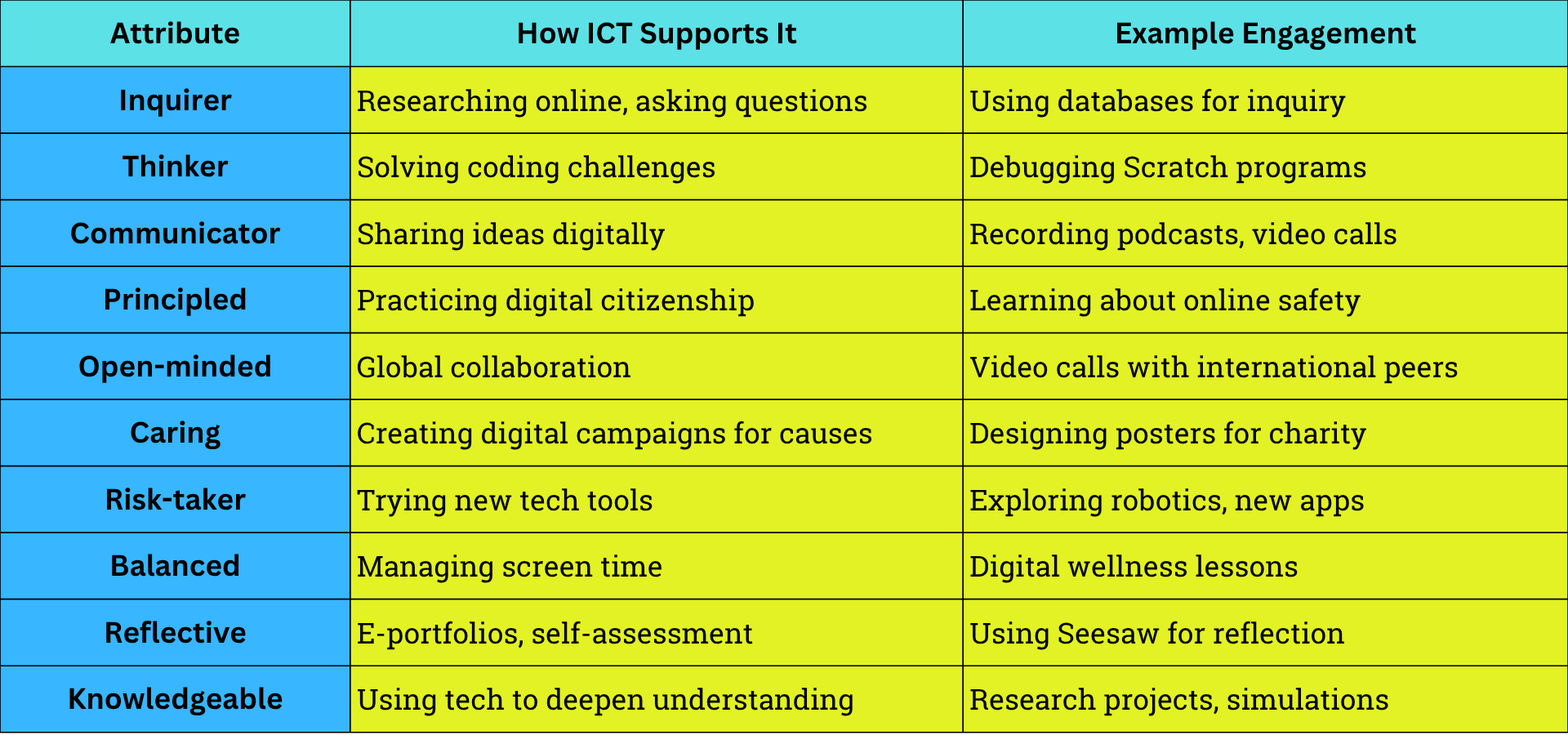
Assessment in ICT values both the process and product of learning. Formative and summative assessments capture creativity, growth, and skill development. The table provides grade-level examples of authentic assessment practices for ICT learning.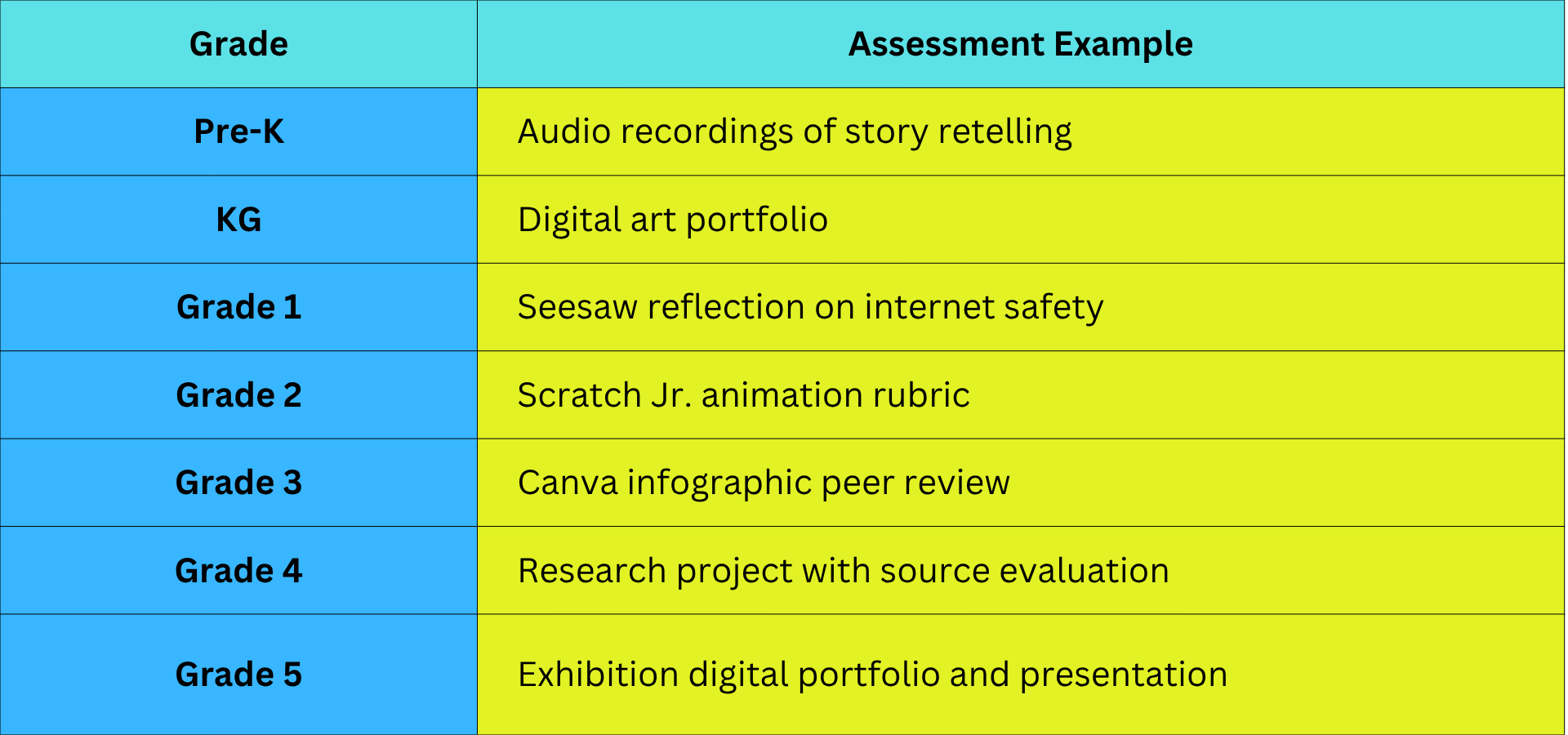 fd
fd
𝟴. 𝗗𝗶𝗴𝗶𝘁𝗮𝗹 𝗖𝗶𝘁𝗶𝘇𝗲𝗻𝘀𝗵𝗶𝗽: 𝗘𝘁𝗵𝗶𝗰𝘀, 𝗦𝗮𝗳𝗲𝘁𝘆, 𝗮𝗻𝗱 𝗥𝗲𝘀𝗽𝗼𝗻𝘀𝗶𝗯𝗶𝗹𝗶𝘁𝘆
Digital citizenship is a non-negotiable foundation of ICT in the PYP. Explicit instruction and ongoing dialogue are essential.
- Privacy and Safety: Students learn about strong passwords, not sharing personal information, and recognizing safe sites.
- Respect and Etiquette: Emphasis on kind communication, respecting others’ work, and understanding consequences of online actions.
- Intellectual Property: Understanding copyright, fair use, and how to credit sources.
- Action: Students lead digital citizenship campaigns, create posters, or mentor younger peers.
Example: Grade 2 students participate in a “Digital Superheroes” week, designing and presenting posters on safe online behavior. They role-play scenarios and reflect on how to be principled and caring digital citizens.
𝟵. 𝗖𝗼𝗹𝗹𝗮𝗯𝗼𝗿𝗮𝘁𝗶𝗼𝗻 𝗮𝗻𝗱 𝗚𝗹𝗼𝗯𝗮𝗹 𝗖𝗼𝗻𝗻𝗲𝗰𝘁𝗶𝗼𝗻𝘀
ICT enables students to connect, collaborate, and learn with others beyond their immediate classroom. Through video calls, shared documents, and global projects, students develop intercultural understanding and global citizenship.
- Local Collaboration: Students co-author documents, give digital feedback, and participate in virtual book clubs.
- Global Collaboration: Virtual exchanges, shared blogs, and international projects connect students to peers worldwide, fostering open-mindedness and global citizenship.
Example: Grade 5 students partner with a school in another country to co-create a blog on sustainable living. They exchange questions, share photos, and collaborate on digital projects, practicing communication, research, and social skills.
𝟭𝟬. 𝗦𝘂𝗽𝗽𝗼𝗿𝘁𝗶𝗻𝗴 𝗔𝗹𝗹 𝗟𝗲𝗮𝗿𝗻𝗲𝗿𝘀: 𝗗𝗶𝗳𝗳𝗲𝗿𝗲𝗻𝘁𝗶𝗮𝘁𝗶𝗼𝗻 𝗮𝗻𝗱 𝗜𝗻𝗰𝗹𝘂𝘀𝗶𝗼𝗻
ICT supports personalized learning by meeting diverse needs, ensuring all students can engage, express, and succeed.
ICT is a powerful tool for differentiation:
- Accessibility: Text-to-speech, translation tools, and visual supports help English language learners and students with diverse needs.
- Choice: Students select from various digital tools to demonstrate understanding (e.g., video, podcast, infographic).
- Pacing: Self-paced tutorials and scaffolded tasks support different learning speeds.
Example: During a research unit, Grade 4 students choose to present their learning as a video, podcast, or interactive slideshow. The teacher provides checklists and mini-lessons tailored to each format.
𝟭𝟭. 𝗔𝗰𝘁𝗶𝗼𝗻 𝗧𝗵𝗿𝗼𝘂𝗴𝗵 𝗜𝗖𝗧: 𝗠𝗮𝗸𝗶𝗻𝗴 𝗮 𝗗𝗶𝗳𝗳𝗲𝗿𝗲𝗻𝗰𝗲
Students use technology to take meaningful action, advocate, and create positive change locally and globally. Action is a core of the PYP. ICT empowers students to:
- Advocate: Create digital campaigns for causes (e.g., recycling, anti-bullying).
- Educate: Produce how-to videos or digital guides for the school community.
- Innovate: Develop apps or websites to solve real problems.
Example: Grade 3 students, after learning about water conservation, design digital posters and short videos to educate their peers. They share these on the school website, inspiring action school-wide.
𝟭𝟮. 𝗙𝗮𝗺𝗶𝗹𝘆 𝗮𝗻𝗱 𝗖𝗼𝗺𝗺𝘂𝗻𝗶𝘁𝘆 𝗘𝗻𝗴𝗮𝗴𝗲𝗺𝗲𝗻𝘁
ICT fosters strong partnerships by connecting families, teachers, and communities in students’ learning journeys.
- Parent Workshops: Digital citizenship, online safety, supporting ICT at home.
- Communication: Sharing ICT learning via newsletters, blogs, portfolios.
- Community Partnerships: Local experts on technology careers, workshops.
Example: “Family Code Night”—students and parents solve coding challenges together.
𝟭𝟯. 𝗧𝗲𝗮𝗰𝗵𝗲𝗿 𝗣𝗿𝗼𝗳𝗲𝘀𝘀𝗶𝗼𝗻𝗮𝗹 𝗗𝗲𝘃𝗲𝗹𝗼𝗽𝗺𝗲𝗻𝘁
Ongoing training equips teachers with skills to confidently integrate ICT and enhance inquiry-based learning.
- Ongoing PD: Workshops on new tools, digital pedagogy, IB ICT integration.
- Peer Mentoring: Experienced teachers coach new colleagues.
- Resource Sharing: Collaborative planning, shared digital resource banks.
𝟭𝟰. 𝗩𝗶𝘀𝘂𝗮𝗹 𝗘𝘅𝗮𝗺𝗽𝗹𝗲: 𝗜𝗖𝗧 𝗜𝗻𝘁𝗲𝗴𝗿𝗮𝘁𝗶𝗼𝗻 𝗣𝗿𝗼𝗴𝗿𝗲𝘀𝘀𝗶𝗼𝗻 (𝗣𝗿𝗲-𝗞 𝘁𝗼 𝗚𝗿𝗮𝗱𝗲 𝟱)
A clear progression shows how ICT skills develop from basic use to advanced, collaborative digital learning.

𝟭𝟱. 𝗘𝘀𝘀𝗲𝗻𝘁𝗶𝗮𝗹 𝗘𝗹𝗲𝗺𝗲𝗻𝘁𝘀 𝗼𝗳 𝘁𝗵𝗲 𝗣𝗬𝗣 𝗮𝗻𝗱 𝗜𝗖𝗧 𝗜𝗻𝘁𝗲𝗴𝗿𝗮𝘁𝗶𝗼𝗻
ICT supports all five essential elements of the PYP – knowledge, concepts, skills, attitudes and action – ensuring holistic student development. The table describes each element and gives concrete ICT examples for classroom application.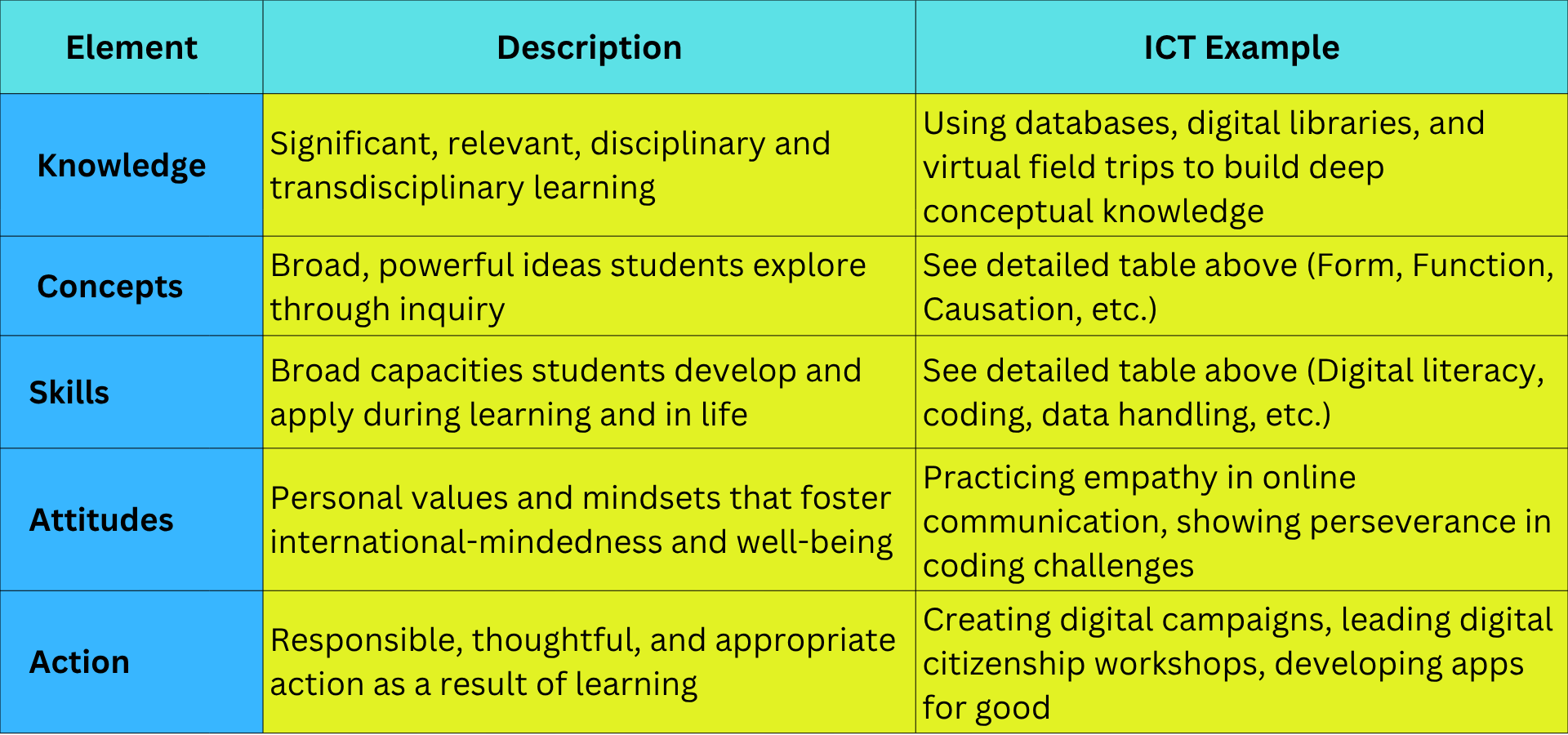 f
f
𝗖𝗼𝗻𝗰𝗹𝘂𝘀𝗶𝗼𝗻: 𝗧𝗵𝗲 𝗙𝘂𝘁𝘂𝗿𝗲-𝗥𝗲𝗮𝗱𝘆 𝗣𝗬𝗣 𝗟𝗲𝗮𝗿𝗻𝗲𝗿
ICT in the PYP is about inquiry, creativity, connection, and action. When thoughtfully integrated, ICT empowers every student to be an inquirer, communicator, principled digital citizen, and change-maker. For educators, this means planning with intention, modeling curiosity and ethical behavior, and creating opportunities for every learner to shine. This guide is your comprehensive reference, practical, detailed, and deeply aligned with the IB mission and philosophy.
𝗥𝗲𝗳𝗲𝗿𝗲𝗻𝗰𝗲𝘀
- IB PYP Curriculum Framework (IB)
- ISOP PYP ICT Scope and Sequence (IB)
- PYP Curriculum Guide (International School of Paris)
- PYP Essential Elements (IB)
- Good ICT Practices in PYP (Slideshare)



5 thoughts on “The Role of ICT in the IB PYP: A Guide for Educators”
Hi Ma’am,
I would like to know about new IB PYP frame work 2025, as old scope and sequence replaced into Subject continuum, how do we prepare ICT continuum, is it different phases wise or do we need to follow the traditional scope and sequence.
Hi, thank you for your question. With the updated PYP framework, the IB Subject Continuums are intended as examples to support schools in developing their own scope and sequences; ICT is not included as a separate IB Subject Continuum. Therefore, schools can continue to use and review their existing ICT Scope and Sequence, while developing a progressive, phase-wise ICT/digital learning progression that is meaningfully integrated across the transdisciplinary curriculum and aligned with the school’s context.
Thank you so much for your reply Ma’am,
I would also like to understand how the 2025 framework specifically applies to ICT, so that the ICT learning experiences we design are aligned with the current IB expectations while remaining developmentally appropriate for our students.
as per my understanding.
Thank you Ma’am,
but IB has reinforced the importance of coherence across learning areas. With the introduction of the 2025 framework, a unified structure and shared vocabulary are intended to strengthen connections across the curriculum. Therefore, the ICT framework should also evolve accordingly. yes I do understand ICT is a tool not isolated subject.
I would also like to understand how the 2025 framework specifically applies to ICT, so that the ICT learning experiences we design are aligned with the current IB expectations while remaining developmentally appropriate for our students. is there any updates in inquiry cycle?
Thank you for the follow-up. In the current PYP framework, ICT/digital technologies should be considered in relation to the broader curriculum rather than as a separate prescribed subject framework. Practically, this means planning developmentally appropriate opportunities for learners to use digital technologies purposefully within authentic, transdisciplinary inquiries-developing knowledge, conceptual understanding, ATL skills, agency and responsible action. Schools can review and develop their own progression of digital competencies according to their context; there is no separate IB-prescribed ICT Subject Continuum. Regarding the inquiry cycle, there is no new ICT-specific cycle- the PYP continues to position inquiry as a flexible process that can be framed and represented in different ways.