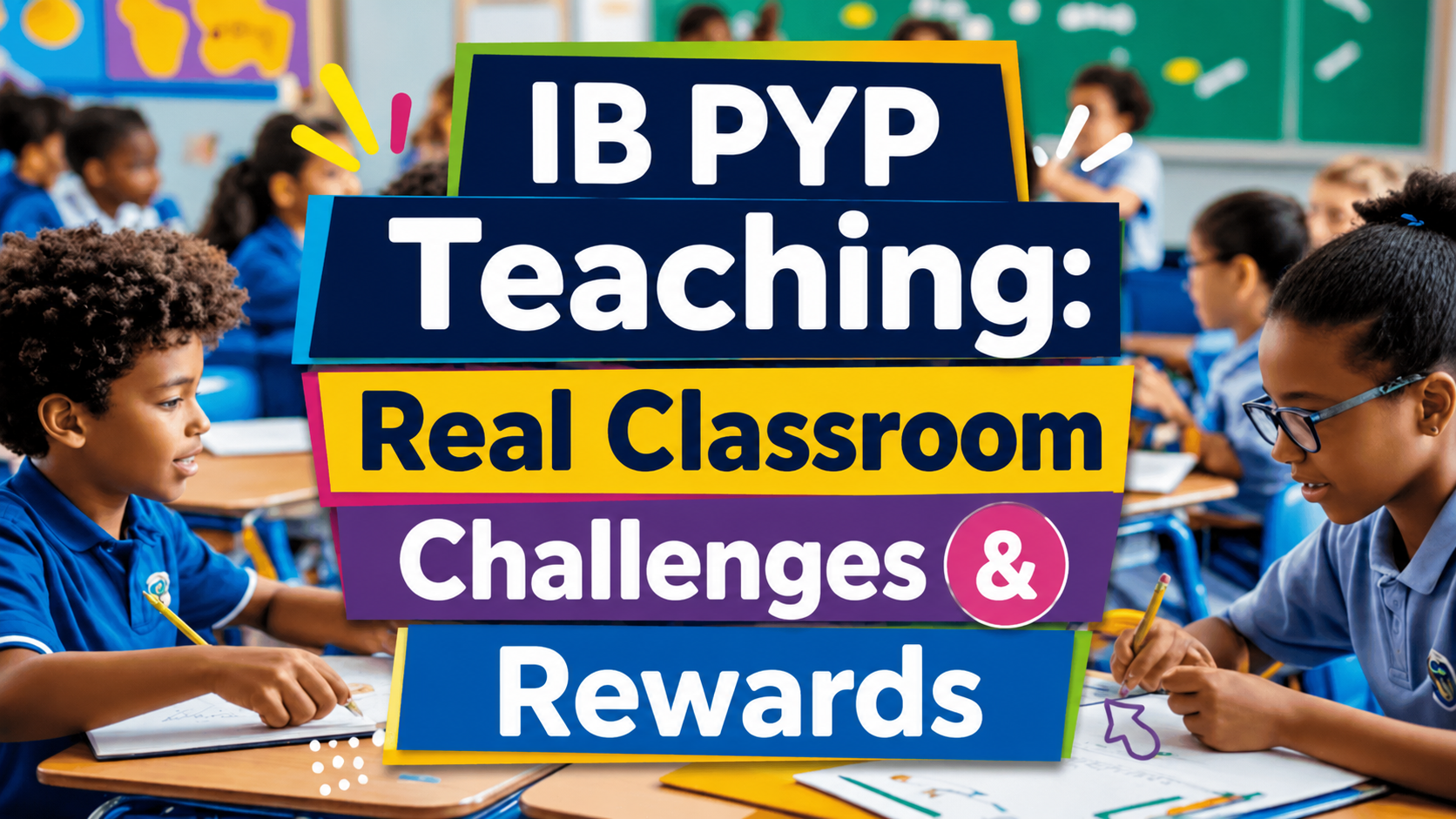
IB PYP Teaching involves balancing inquiry-based learning, student agency, conceptual understanding, and real classroom expectations within the International Baccalaureate Primary Years Programme (PYP).
While the PYP offers meaningful and transformative learning experiences, educators often face authentic classroom challenges that require flexibility, collaboration, reflection, and responsive teaching practices. This article explores the real struggles PYP teachers encounter while also celebrating the profound rewards of this dynamic teaching model.
𝟏. Balancing Inquiry and Curriculum Expectations in the PYP
𝐂𝐡𝐚𝐥𝐥𝐞𝐧𝐠𝐞: The PYP promotes flexible, student-led inquiry, but new teachers may struggle with how much guidance to provide. Without enough structure, inquiries can become unfocused, yet excessive rigidity stifles natural curiosity. Additionally, aligning spontaneous student questions with the PYP transdisciplinary themes can feel overwhelming, especially when time constraints demand measurable progress.

𝐄𝐱𝐚𝐦𝐩𝐥𝐞: During a unit on “How We Organize Ourselves,” students express fascination with how local markets function. The teacher must decide whether to deepen this organic inquiry or redirect attention to planned concepts like supply chains and economic systems.
𝐒𝐨𝐥𝐮𝐭𝐢𝐨𝐧:
- Use guided provocations (e.g., “What systems do you notice at the market?”) to scaffold inquiry.
- Maintain a visible learning journey (documentation walls, reflection journals) to track alignment with objectives.
- Allow flexible timelines—some inquiries may need an extension, while others can be condensed.
𝐏𝐨𝐬𝐢𝐭𝐢𝐯𝐞 𝐎𝐮𝐭𝐜𝐨𝐦𝐞: When balanced effectively, students engage in meaningful, self-directed learning while still achieving curriculum goals. Teachers also develop the skill of responsive planning, adapting lessons to student interests without losing sight of key outcomes.
𝟐. Managing Student Agency in the PYP Classroom
𝐂𝐡𝐚𝐥𝐥𝐞𝐧𝐠𝐞: Student agency—a cornerstone of the PYP—can be difficult to implement smoothly. Some students may dominate discussions, while others hesitate to voice ideas. Teachers must also ensure that choice does not lead to chaos, particularly in large or diverse classrooms. Without clear strategies, student-led learning can result in unequal participation or off-task behavior.

𝐄𝐱𝐚𝐦𝐩𝐥𝐞: In a “Who We Are” unit, students are given freedom to explore identity through personal projects. A few enthusiastic learners take charge, while quieter students disengage, unsure how to contribute.
𝐒𝐨𝐥𝐮𝐭𝐢𝐨𝐧:
- Implement structured choice (e.g., “Select one of these three formats for your presentation”).
- Use collaborative protocols like “Think-Pair-Share” or “Silent Discussions” to ensure all voices are heard.
- Introduce peer feedback systems where students reflect on group dynamics.
𝐏𝐨𝐬𝐢𝐭𝐢𝐯𝐞 𝐎𝐮𝐭𝐜𝐨𝐦𝐞: Students develop confidence, leadership, and collaboration skills, becoming active participants in their learning. Over time, classrooms transform into communities where learners take ownership while respecting shared norms.
𝟑. Time Management Challenges in IB PYP Teaching
𝐂𝐡𝐚𝐥𝐥𝐞𝐧𝐠𝐞: PYP units are open-ended by design, making it difficult to pace lessons effectively. Teachers may spend too long on one inquiry, risking coverage of other essential concepts, or rush through topics, leaving students with superficial understanding. Additionally, unexpected student questions can derail planned schedules, creating tension between depth and breadth of learning.

𝐄𝐱𝐚𝐦𝐩𝐥𝐞: A class exploring “Where We Are in Place and Time” becomes deeply engrossed in ancient civilizations, spending weeks on Egyptian pyramids—delaying the next unit on migration.
𝐒𝐨𝐥𝐮𝐭𝐢𝐨𝐧:
- Set flexible checkpoints (e.g., “By Friday, we need to summarize key findings”).
- Use exit tickets (“What’s one question you still have?”) to gauge when to transition.
- Integrate mini-inquiries within larger units to maintain momentum.
𝐏𝐨𝐬𝐢𝐭𝐢𝐯𝐞 𝐎𝐮𝐭𝐜𝐨𝐦𝐞: Students experience deeper, more engaged learning without sacrificing curriculum coverage. Teachers also refine their ability to adapt and prioritize based on student needs.
𝟒. 𝐃𝐢𝐟𝐟𝐞𝐫𝐞𝐧𝐭𝐢𝐚𝐭𝐢𝐧𝐠 𝐈𝐧𝐬𝐭𝐫𝐮𝐜𝐭𝐢𝐨𝐧 𝐢𝐧 𝐚 𝐃𝐢𝐯𝐞𝐫𝐬𝐞 𝐏𝐘𝐏 𝐂𝐥𝐚𝐬𝐬𝐫𝐨𝐨𝐦
𝐂𝐡𝐚𝐥𝐥𝐞𝐧𝐠𝐞: PYP classrooms often include multilingual learners, students with varying abilities, and different learning styles. Designing inclusive, differentiated lessons that honor individual needs while maintaining a cohesive unit is demanding. Teachers must ensure that no student feels excluded or unchallenged, which requires careful planning and ongoing assessment.

𝐄𝐱𝐚𝐦𝐩𝐥𝐞: During a math inquiry on patterns, some students quickly identify complex sequences, while others struggle with basic repetitions. The teacher must scaffold without lowering expectations for advanced learners.
𝐒𝐨𝐥𝐮𝐭𝐢𝐨𝐧:
- Offer tiered tasks (e.g., “Option 1: Identify the pattern; Option 2: Extend it; Option 3: Create your own”).
- Use visual aids, manipulatives, and peer tutoring to support diverse learners.
- Encourage student-led workshops where advanced learners teach concepts to peers.
𝐏𝐨𝐬𝐢𝐭𝐢𝐯𝐞 𝐎𝐮𝐭𝐜𝐨𝐦𝐞: All students feel valued and appropriately challenged, fostering a culture of inclusivity and growth. Differentiation becomes a natural part of the learning process rather than an added burden.
𝟓. Managing Parent Expectations in the PYP
𝐂𝐡𝐚𝐥𝐥𝐞𝐧𝐠𝐞: Many parents are accustomed to traditional, worksheet-driven education and may question the PYP’s lack of grades, formal tests, or rigid homework. Some worry that inquiry-based learning is “too playful” or lacks academic rigor. Teachers must communicate effectively to build trust and demonstrate the value of the PYP approach.

𝐄𝐱𝐚𝐦𝐩𝐥𝐞: A parent asks, “Why isn’t my child memorizing spelling words? How will they learn without tests?”
𝐒𝐨𝐥𝐮𝐭𝐢𝐨𝐧:
- Host PYP to explain the philosophy.
- Share student portfolios showcasing growth through projects, reflections, and presentations.
- Provide take-home inquiry prompts (e.g., “Interview a grandparent about family traditions”) to involve parents in learning.
𝐏𝐨𝐬𝐢𝐭𝐢𝐯𝐞 𝐎𝐮𝐭𝐜𝐨𝐦𝐞: Parents become active partners in their child’s education, understanding how inquiry builds critical thinking, creativity, and real-world skills. Over time, they appreciate the long-term benefits of the PYP approach.
𝐖𝐡𝐚𝐭 𝐄𝐥𝐬𝐞 𝐊𝐞𝐞𝐩𝐬 𝐏𝐘𝐏 𝐓𝐞𝐚𝐜𝐡𝐞𝐫𝐬 𝐔𝐩 𝐚𝐭 𝐍𝐢𝐠𝐡𝐭?
🕵️♂️ 𝐑𝐞𝐬𝐨𝐮𝐫𝐜𝐞 𝐇𝐮𝐧𝐭𝐢𝐧𝐠 The Struggle:Finding quality transdisciplinary resources that align with PYP concepts and local contexts requires hours of digging through generic materials.
📑 𝐃𝐨𝐜𝐮𝐦𝐞𝐧𝐭𝐚𝐭𝐢𝐨𝐧 𝐒𝐲𝐬𝐭𝐞𝐦𝐬 The Struggle: Maintaining portfolios, planners, and evidence of learning while teaching full-time leads to after-hours work.
𝐂𝐨𝐧𝐜𝐥𝐮𝐬𝐢𝐨𝐧:
Teaching in the IB PYP framework is both challenging and deeply rewarding. The struggles—balancing structure with freedom, managing student agency, differentiating instruction, and communicating with parents—are real, but they are also opportunities for professional and personal growth.
The Bright Side of PYP Teaching:
✅ Students become independent, curious, and reflective learners.
✅ Learning is authentic, and connected to real-life contexts.
✅ Teachers evolve as facilitators, constantly innovating and adapting.
For new PYP educators, the key is to embrace the process, seek mentorship, and remain patient. The PYP isn’t just a curriculum—it’s a mindset that transforms classrooms into dynamic, student-driven communities.
What challenges have you faced as a PYP teacher? What strategies have worked for you? Share your experiences in the comments.