

𝗪𝗵𝗮𝘁 𝗔𝗿𝗲 𝗜𝗻𝗾𝘂𝗶𝗿𝘆 𝗟𝗲𝗮𝗿𝗻𝗶𝗻𝗴 𝗣𝗿𝗼𝗴𝗿𝗲𝘀𝘀𝗶𝗼𝗻𝘀 in the IB PYP?
Inquiry Learning Progressions IB PYP are a newly updated framework introduced in 2025 to help teachers and students see how inquiry skills grow step by step across different ages and grades. The main idea is to make learning, student agency, and teacher facilitation clear in all classrooms. Instead of following a strictly set path, ILPs honor every student’s journey and make it easier for teachers to support and celebrate learning progress.
𝟭. 𝗪𝗵𝘆 𝗜𝗟𝗣𝘀 𝗔𝗿𝗲 𝗜𝗺𝗽𝗼𝗿𝘁𝗮𝗻𝘁 𝗳𝗼𝗿 𝗦𝘁𝘂𝗱𝗲𝗻𝘁 𝗚𝗿𝗼𝘄𝘁𝗵
ILPs are valuable because they focus on students’ personal learning stories rather than just marking off skills on a list. They help teachers use a common language for planning and assessments, allowing feedback that makes sense to all. ILPs put student agency at the center, giving children more control and awareness over their learning.
𝟮. 𝗪𝗵𝗮𝘁 𝗜𝗻𝗾𝘂𝗶𝗿𝘆 𝗟𝗼𝗼𝗸𝘀 𝗟𝗶𝗸𝗲 𝗶𝗻 𝘁𝗵𝗲 𝗖𝗹𝗮𝘀𝘀𝗿𝗼𝗼𝗺
Inquiry is the art of asking questions, observing, role playing, and making decisions. When teachers guide inquiry, they encourage learners to explore, think out loud, and reflect on new ideas. Students take more ownership as they move from asking basic questions to doing deeper investigations and sharing what they find with others.
𝟯. 𝗗𝗲𝘃𝗲𝗹𝗼𝗽𝗺𝗲𝗻𝘁𝗮𝗹 𝗦𝘁𝗮𝗴𝗲𝘀 𝗼𝗳 𝗜𝗻𝗾𝘂𝗶𝗿𝘆 (𝗙𝗹𝗼𝘄𝗰𝗵𝗮𝗿𝘁)
The stages show how inquiry skills develop progressively:
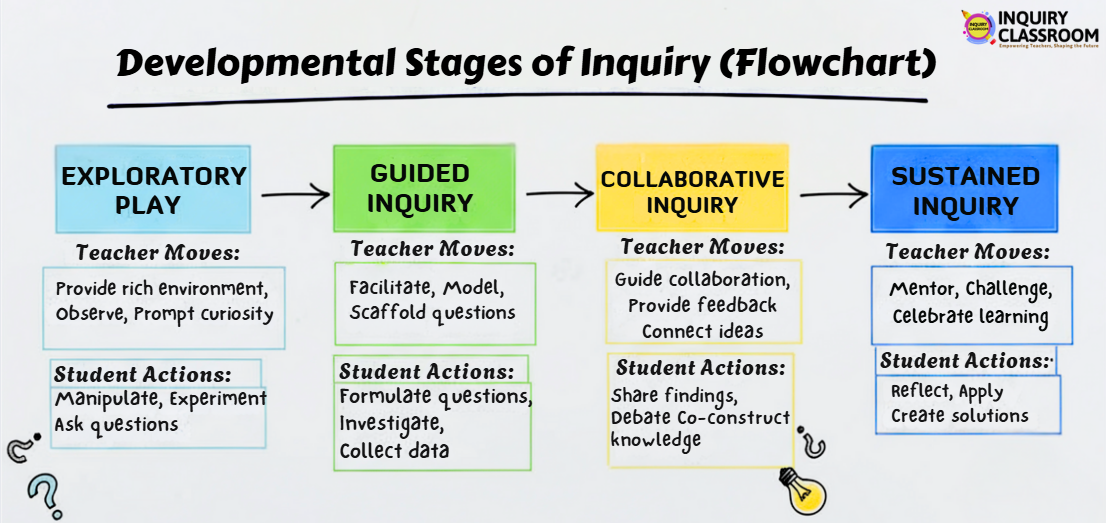
- Exploratory Play: Young learners explore and notice with wonder.
- Guided Inquiry: Teachers scaffold focused questioning and investigations.
- Collaborative Inquiry: Students share, discuss, and build understanding together.
- Sustained Inquiry: Learners plan, research, reflect, and revise independently.
𝟰. 𝗗𝗲𝘃𝗲𝗹𝗼𝗽𝗺𝗲𝗻𝘁𝗮𝗹 𝗣𝗿𝗼𝗴𝗿𝗲𝘀𝘀𝗶𝗼𝗻𝘀 𝗔𝗰𝗿𝗼𝘀𝘀 𝗚𝗿𝗮𝗱𝗲 𝗟𝗲𝘃𝗲𝗹𝘀
Each row identifies what students do and how teachers support them during these phases.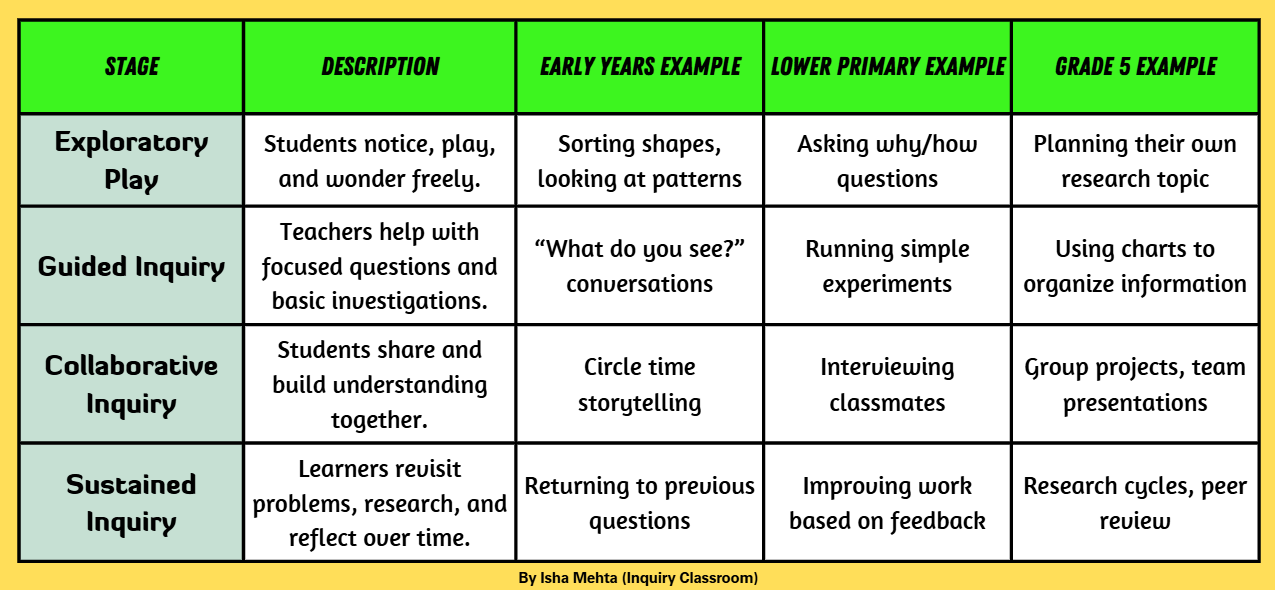
𝟱. 𝗦𝘁𝗲𝗽-𝗯𝘆-𝗦𝘁𝗲𝗽 𝗜𝗻𝗾𝘂𝗶𝗿𝘆 𝗙𝗿𝗮𝗺𝗲𝘄𝗼𝗿𝗸 𝗧𝗮𝗯𝗹𝗲: 𝗤𝘂𝗲𝘀𝘁𝗶𝗼𝗻𝗶𝗻𝗴 𝗦𝗸𝗶𝗹𝗹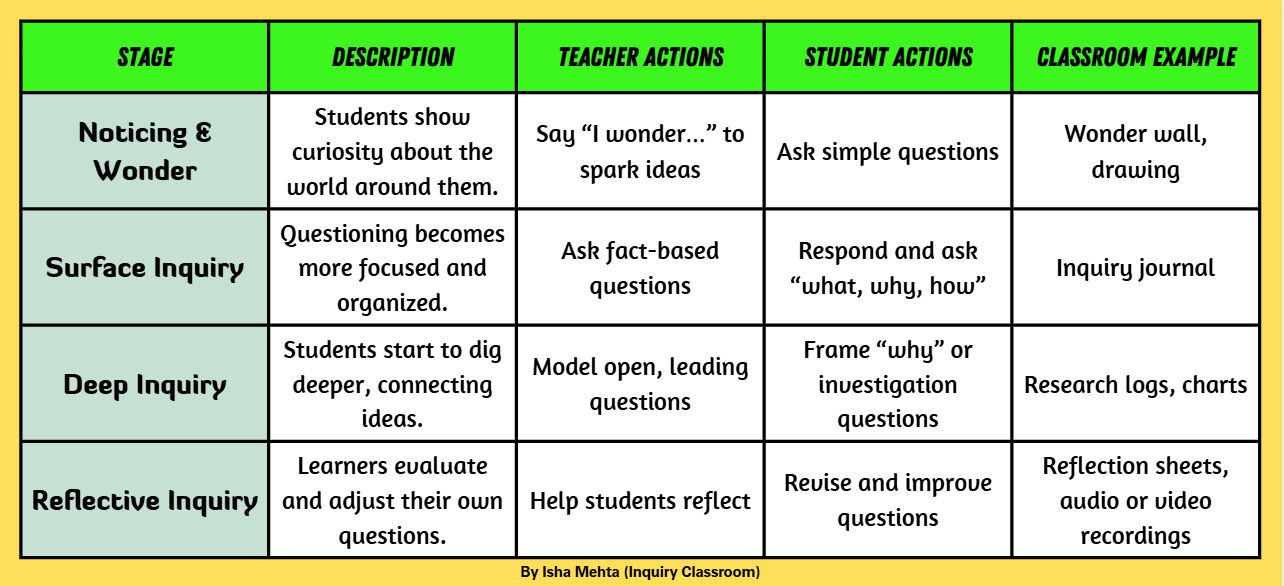
𝟲. 𝗛𝗼𝘄 𝘁𝗼 𝗦𝘂𝗽𝗽𝗼𝗿𝘁 𝗮𝗻𝗱 𝗧𝗿𝗮𝗰𝗸 𝗦𝘁𝘂𝗱𝗲𝗻𝘁 𝗔𝗴𝗲𝗻𝗰𝘆
Student agency means learners take charge of their inquiry journeys. Teachers encourage students to set goals, choose how they record their inquiry, and reflect on their growth. Portfolios, journals, wonder boards, and digital logs are useful. By focusing on growth, students build a sense of responsibility and pride in what they discover.
𝟳. 𝗦𝗮𝗺𝗽𝗹𝗲 𝗟𝗲𝘀𝘀𝗼𝗻 𝗣𝗹𝗮𝗻 𝗨𝘀𝗶𝗻𝗴 𝗜𝗟𝗣𝘀 𝗳𝗼𝗿 𝗔𝗴𝗲𝗻𝗰𝘆
Supporting agency works best when built into lessons. Here is a simple plan showing how ILPs can guide classroom activities: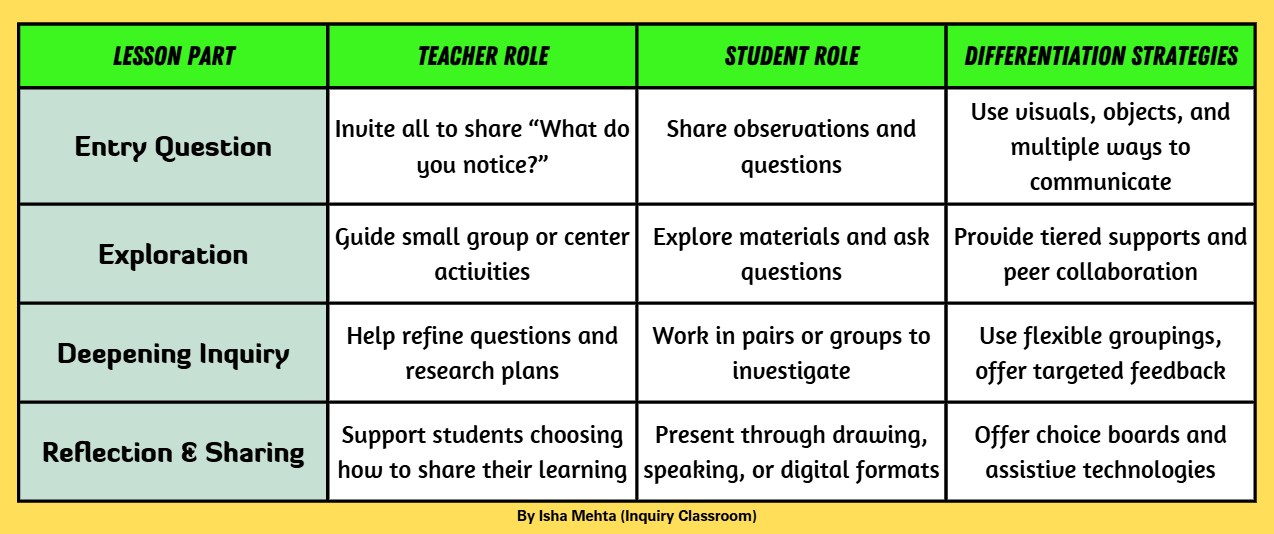
d
𝟴. 𝗧𝗲𝗮𝗰𝗵𝗲𝗿 𝗗𝗼𝗰𝘂𝗺𝗲𝗻𝘁𝗮𝘁𝗶𝗼𝗻 𝗼𝗳 𝗜𝗻𝗾𝘂𝗶𝗿𝘆 𝗚𝗿𝗼𝘄𝘁𝗵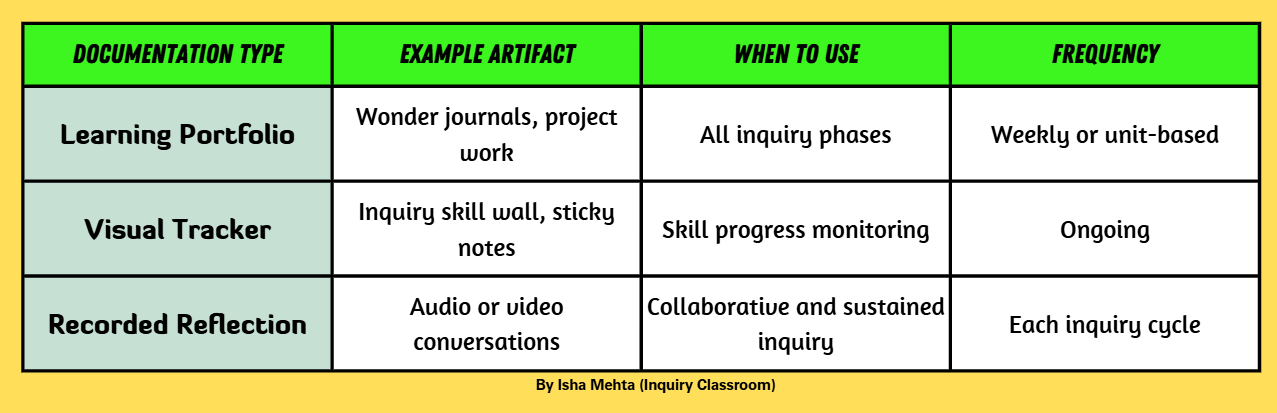
𝟵. 𝗙𝗼𝗿𝗺𝗮𝘁𝗶𝘃𝗲 𝗔𝘀𝘀𝗲𝘀𝘀𝗺𝗲𝗻𝘁 𝗖𝗵𝗲𝗰𝗸𝗹𝗶𝘀𝘁
- Are inquiry skills visible in student work and actions?
- Are students developing and refining their own questions?
- Can students explain and document their own inquiry growth?
- Is feedback clear, timely, and helpful for next steps?
- Are there multiple ways for students to express learning?
- Does evidence show student agency throughout?
𝟭𝟬. 𝗥𝗲𝗮𝗹 𝗦𝘁𝘂𝗱𝗲𝗻𝘁 𝗔𝗿𝘁𝗶𝗳𝗮𝗰𝘁𝘀
- Early Years: Drawings with questions and teacher notes from group discussions.
- Lower Primary: Inquiry journals, interview notes, wonder boards.
- Grade 5: Detailed research plans, reflective videos, peer feedback documentation.
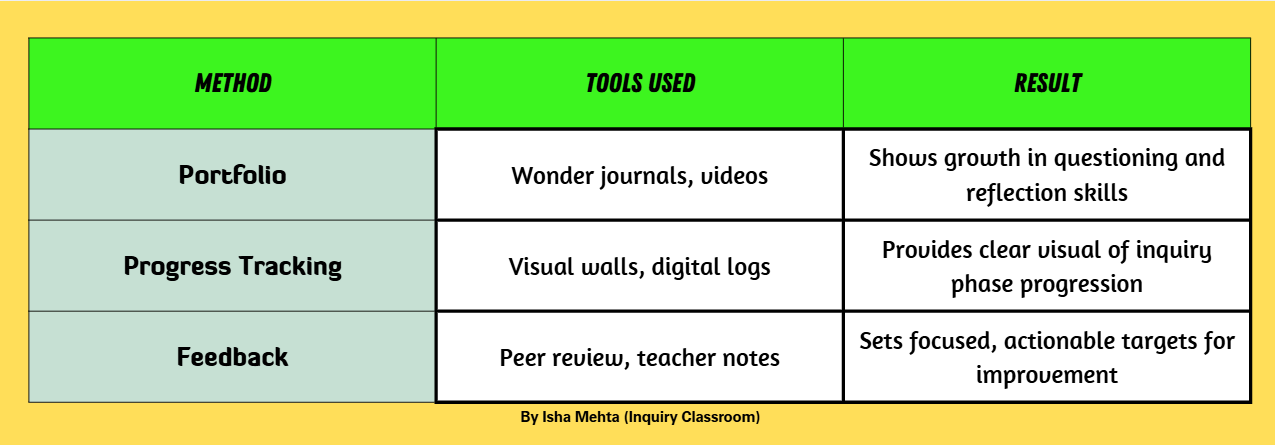
𝟭𝟭. 𝗦𝘂𝗺𝗺𝗮𝗿𝘆 𝗧𝗮𝗯𝗹𝗲: 𝗗𝗼𝗰𝘂𝗺𝗲𝗻𝘁𝗮𝘁𝗶𝗼𝗻 𝗧𝗼𝗼𝗹𝘀 𝗮𝗻𝗱 𝗢𝘂𝘁𝗰𝗼𝗺𝗲𝘀
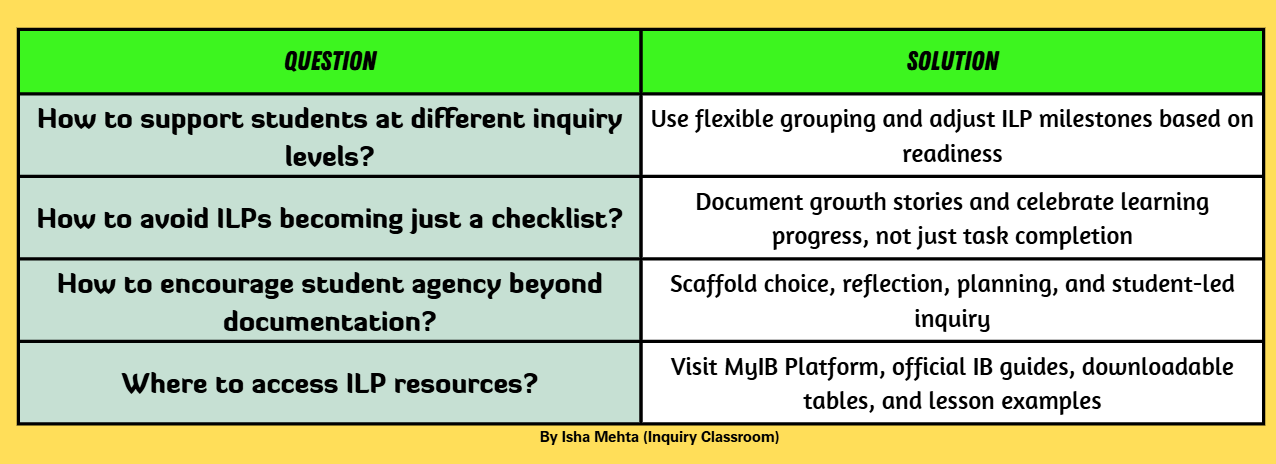
𝗙𝗔𝗤𝘀 𝗼𝗻 𝗜𝗺𝗽𝗹𝗲𝗺𝗲𝗻𝘁𝗮𝘁𝗶𝗼𝗻 𝗖𝗵𝗮𝗹𝗹𝗲𝗻𝗴𝗲𝘀 𝗮𝗻𝗱 𝗦𝗼𝗹𝘂𝘁𝗶𝗼𝗻𝘀
𝗖𝗼𝗻𝗰𝗹𝘂𝘀𝗶𝗼𝗻
Inquiry Learning Progressions change how inquiry is understood and supported in IB PYP classrooms. They help teachers see and nurture inquiry skills as ongoing, growing abilities rather than fixed goals. This focus on visible learning and student agency allows learners to become more confident and responsible thinkers. ILPs support educators in creating vibrant classrooms where students explore, reflect, and take action in meaningful, personalized ways. By using ILPs as a guide for teaching and assessment, IB teachers can help students move from simple exploration to deep inquiry and purposeful learning.




2 thoughts on “Inquiry Learning Progressions in the IB PYP: A Complete Guide for Teachers”
Very informative and helpful too.Thanks for sharing.I will need more examples related to inquiry progression connect with ATL
Thank you for your feedback, Rachna. That’s a valuable suggestion. We will consider sharing more classroom examples in future articles.